
How to Start Fishing as a Beginner, 5 Easy Steps (And Catch Your First Fish Faster)
You’ve been thinking about it for a while, maybe a buddy keeps posting catch photos, or your kid has been begging you, or you just want a reason to get outside and actually decompress. Whatever got you here, good news: fishing is one of the easiest outdoor hobbies to pick up, and with the right setup, you can realistically catch your first fish on your very first trip.
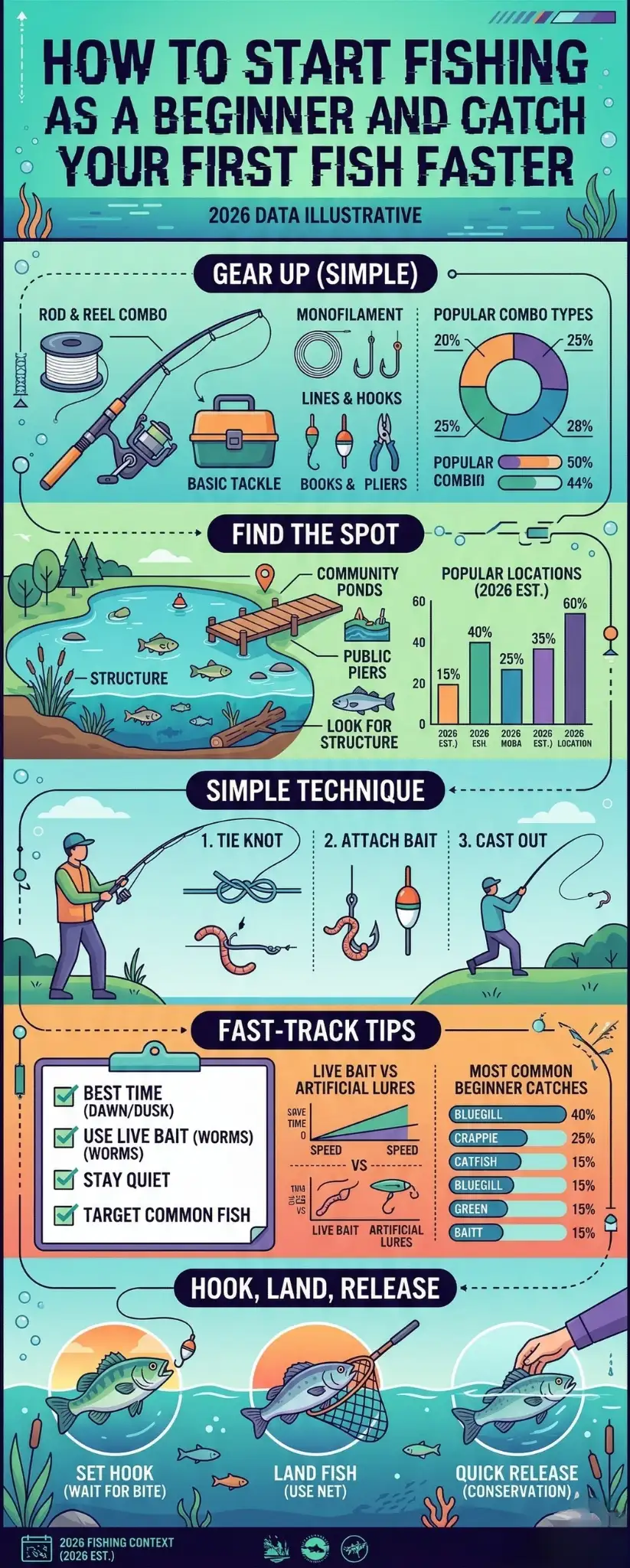
This guide won’t bury you in jargon or overwhelm you with gear lists. It’s written from the perspective of someone who has spent decades on the water and taught complete beginners how to go from zero to landing their first fish fast. Stick with this, do what it says, and you’ll be telling your own first-fish story by the weekend.
What You Actually Need to Know Before Anything Else
Here’s something most fishing guides skip: the single biggest mistake beginners make has nothing to do with gear. It’s picking a spot that’s too hard, a species that’s too selective, or a technique that takes months to master. Then they stand on the bank for four hours, catch nothing, and never go back.
Don’t let that be you.
The move is to start with a simple, small pond, basic setup, easy species, and get a bite in your hands fast. Confidence is everything in this sport. Once you feel that first tug, you’re hooked for life. (Yes, pun intended.)
Step 1: Get a Fishing License First (Don’t Skip This)
Before you wet a line anywhere in the United States, you need a valid fishing license. This isn’t optional. Game wardens actively patrol popular fishing spots, and getting caught without one is a real fine, anywhere from $50 to several hundred dollars, depending on the state.
The good news? Getting licensed takes about five minutes.
How to buy your license:
- Go to your state’s fish and wildlife agency website. Just Google “[your state] fishing license.”
- Most states also sell them at Walmart, Bass Pro Shops, or any local sporting goods store
- Some states offer one-day or three-day licenses for around $7–$15, great if you’re just testing the waters before committing to a full year
What kind do you need?
If you’re sticking to lakes, ponds, and rivers, a freshwater license covers you. If there’s any chance you’ll fish near the coast or in tidal waters, check whether your state requires a separate saltwater license. Most coastal states do. When in doubt, buy both; it’s usually only a few dollars more and saves you the headache.
One more thing: grab a copy of your state’s fishing regulations when you buy your license. It’s usually a small booklet or downloadable PDF. It covers size limits, bag limits (how many fish you can keep per day), and any special rules for specific waters. You don’t need to memorize it, just skim the rules for freshwater species and the local waters you plan to hit.
Step 2: Build Your First Fishing Setup (Without Overspending)
Walk into any big-box outdoor store, and the gear section will try to sell you everything. Ignore most of it. Here’s exactly what a beginner needs and nothing more.
The Right Rod and Reel
For a first-timer, a spinning rod and reel combo is the clear call. It’s forgiving, casts well, and gives you enough feel to actually detect bites. Avoid fly rods and baitcasters for now; both have legitimate learning curves that will frustrate you before you’re ready.
Look for a 6 to 7-foot medium-action spinning combo. Brands like Shakespeare, Ugly Stik, and Zebco all make solid beginner setups in the $30–$80 range. Don’t let anyone talk you into spending more than that for your first rod. Seriously.
If you’re buying for a young child (under 10), a spincast combo with a push-button reel is even easier to use and reduces frustration.
Fishing Line
Most combos come pre-spooled, but if yours doesn’t, pick up 6 lb monofilament line. Mono is cheap, easy to manage, and forgiving when you make mistakes with your knots. It also has a little stretch to it, which actually helps when you’re learning to set the hook.
Braided line and fluorocarbon are worth learning about eventually, but they’re unnecessary right now.
Hooks, Bobbers, and Sinkers
This is your terminal tackle, the stuff on the end of your line that actually does the fishing.
- Hooks: Size 6 or size 8 bait hooks cover almost everything a beginner will target. A multipack with both sizes runs about $3.
- Split-shot sinkers: Small pinch-on weights. You’ll clamp one or two of these onto your line about 6–12 inches above the hook to keep your bait at the right depth.
- Bobbers: The classic red-and-white bobber still works. A slip float is slightly more advanced but casts better and fishes cleaner. Either is fine for starting out.
Total cost for hooks, sinkers, and bobbers: under $10.
A Simple Tackle Box
Pick up a small plastic tackle box with a few compartments. You don’t need a tackle bag the size of luggage. Keep hooks in one tray, sinkers in another, and bobbers in a separate small bag. That’s it. The organization keeps you fishing instead of digging.
Step 3: Choose Your Bait (Live Bait Wins for Beginners)
Here’s the honest truth: live bait outfishes artificial lures for beginners every single time. The bait moves on its own, smells real, and fish recognize it instantly. You don’t have to impart any action, master any retrieve, or figure out what color a bass is “in the mood for” today.
The three baits that will catch fish on any given day:
1. Nightcrawlers (earthworms)
These are the universal beginner bait. They catch bluegill, perch, bass, catfish, crappie, pretty much every freshwater species you’ll encounter. A carton costs about $3–$4 at any bait shop or Walmart sporting goods section. Thread the hook through the worm three or four times instead of just once; a long dangling tail gets nibbled off without hooking the fish.
2. PowerBait
If you’re fishing a stocked trout pond (very common at state parks and wildlife management areas), PowerBait is almost cheating. It’s a scented, dough-like paste in rainbow colors. Roll a small ball around your hook, cast it out, let it sit on the bottom, and wait. Stocked rainbows hammer it.
3. Small live minnows (shiners)
Great for bass and crappie. Hook a shiner through the back just behind the dorsal fin and let it swim. This is the “set it and forget it” of fishing bait.
Where to get bait: Any local bait shop. If there isn’t one nearby, most Walmarts with a sporting goods section carry nightcrawlers and PowerBait in the fishing aisle.
Step 4: Find a Beginner-Friendly Fishing Spot
Where you fish matters as much as how you fish. A beginner at the right spot will catch more fish in an hour than an expert at the wrong one will in a full day.
The best starting point for any beginner: a small local pond or community lake.
Here’s why they work so well:
- Fish are concentrated in a smaller area; you don’t have to “find” them
- Still water is easier to cast in than moving current
- Many ponds and community lakes are stocked regularly with easy-to-catch species
- No boat required, bank fishing works perfectly
How to find one near you:
- Search “fishing spots near me” in Google Maps, and labeled parks with lakes will pop up
- Use the free Fishbrain app, which crowdsources fishing reports from local anglers
- Call or visit a local bait shop; the staff almost always know exactly where fish are biting right now, and they’ll tell you
Once you’re at the water, don’t just cast anywhere. Look for these fish-holding features:
- Shade: Overhanging trees, docks, and bridge pilings all create shadow. Fish hang in the shade, especially in warm weather.
- Structure: Submerged logs, rocks, brush piles, and weeds are cover, fish use these to ambush prey and hide from predators.
- Depth changes: Where shallow water drops into deeper water is a natural fish highway. Cast along that edge.
- Calm corners: Coves and pockets out of wind and current hold baitfish, which attract bigger fish.
You don’t need to know all of these on day one, but knowing to look for a shady dock or some fallen brush will get you bites a lot faster than casting into open water.
Step 5: Rig Up Your Line the Right Way
This is the part that intimidates most beginners, but it takes about two minutes once you do it a few times. Here’s the basic bobber rig, the most beginner-friendly setup in freshwater fishing:
Step-by-step setup:
- Attach the bobber, clip it onto your line about 2–3 feet above the end. If you’re fishing deeper water, move it up to 4–5 feet.
- Pinch on one or two split-shot sinkers about 8–10 inches above where your hook will be. These keep your bait down instead of floating to the surface.
- Tie on your hook using the Improved Clinch Knot, the most widely used beginner knot in fishing:
- Thread 6 inches of line through the hook eye
- Wrap the loose end around the main line 5 times
- Pass the loose end through the small loop near the eye, then through the big loop you just made
- Wet the knot with your mouth (this prevents friction heat from weakening the line)
- Pull both ends firmly until tight
- Trim the tag end close
- Bait the hook, and you’re ready to cast.
How deep should you fish? Start with your bobber set at 2–3 feet. If you’re getting nibbles but no hookups, go shallower. If you see nothing happening after 20 minutes, try deeper.
Step 6: Learn to Cast (It Only Takes 10 Minutes)
The basic overhead cast on a spinning reel works like this:
- Hold the rod in your dominant hand with the reel facing down
- Open the bail (that metal arm on the reel) by flipping it over
- Place your index finger on the line, holding it against the rod grip
- Bring the rod back to about the 2 o’clock position behind your shoulder, not too far
- Swing it forward smoothly toward your target, and release your finger when the rod reaches eye level
- Close the bail immediately as the bait hits the water. This stops the line from unspooling
The most common beginner mistake is releasing the line too late, which sends the bait straight into the ground. If that happens, just try again. Most people get a decent cast on the second or third attempt.
Practice tip: Before you go to the water, tie a small weight (no hook) onto your line and practice casting in your backyard or a park. Seriously, 15 minutes of practice at home will save you an hour of frustration at the water.
Step 7: Detect the Bite and Set the Hook
Watch your bobber. When a fish is messing with your bait, the bobber will twitch, jiggle, or bob up and down. That means something’s interesting. Don’t set the hook yet.
When the bobber goes fully underwater, that’s your cue. Lift the rod tip up firmly and quickly (don’t jerk it sideways). This drives the hook point into the fish’s mouth. Once the hook is set, keep the rod tip up and reel steadily while giving a little when the fish pulls.
Common beginner panic: the fish is pulling hard and taking line. That’s okay. Let it run a little, that’s what drag is for. The drag system on your reel is set to release line at a certain tension so the fish doesn’t snap it. Just keep steady pressure on and reel when you can.
When the fish tires out, and you get it close, wet your hands and lift it by gripping its body gently. For bass, you can lip it by holding the lower jaw; they don’t have sharp teeth. For other species, support the body horizontally.
Step 8: The Best Times to Go Fishing (Timing Changes Everything)
This one piece of information will put more fish in your hands than almost any gear upgrade:
Fish early or fish late.
The best freshwater fishing almost always happens during:
- Early morning: From first light until about 9 AM. Fish move shallow and feed aggressively in low light.
- Evening: From about 5 PM until dark. Water cools down, and fish come back out of the depths.
Midday on a sunny summer day? The fish aren’t gone; they’ve just gone deep and stopped feeding as actively. You can still catch them, but it’s harder.
Seasonal timing:
- Spring is the single best season for beginners. Water warms up, fish move shallow, and they’re actively feeding and spawning. Bluegill and bass are accessible from the bank and biting aggressively.
- Fall is a close second. Fish feed heavily before winter and are often in predictable locations near structure.
- Summer means early morning is everything. Get to the water at sunrise, and you’ll beat the heat and the midday slowdown.
- Winter fishing is real catfish, and trout still bite, but it’s slower and requires patience.
One more timing factor worth knowing: Overcast days often fish better than bluebird sunny days. Clouds reduce light penetration, which makes fish less wary and more likely to roam and feed in open water.
The Best Species for a Beginner’s First Fish
You can spend your whole life chasing just one species and never run out of things to learn. But for that first fish, the one that gets you hooked, these are your best bets:
Bluegill (America’s Most Caught Fish)
Bluegill live in virtually every lake and pond in the country. They bite readily on worms, crickets, and small pieces of bread. They fight hard for their size. And they taste amazing on a plate with butter and lemon. For a first-time angler, bluegill is the answer.
How to target them: Small hook (size 8 or 10), a nightcrawler chunk, a bobber set at 2 feet, cast near any dock, weeds, or fallen log. Wait 5 minutes. Move if nothing happens.
Largemouth Bass
The most popular sport fish in North America. Bass are curious, aggressive, and widespread. A worm rigged on a small hook fished slowly along the bottom near any structure will get you bites. They get big enough to give your rod a workout without requiring specialized gear.
Catfish
If you want to catch a fish tonight and don’t care much about technique, catfish are your best bet. Bait up a big hook with a chicken liver, nightcrawler, or cut bait, toss it on the bottom, and wait. Catfish feed by smell, so the stinkier the bait, the better. Set up your rod in a rod holder, sit back, and wait for the tip to bend.
Stocked Rainbow Trout
Many state parks and wildlife management areas stock trout ponds specifically for new anglers. These fish have been raised in a hatchery and aren’t particularly shy. Hit them with PowerBait on the bottom or a small inline spinner, and they’ll eat.
The 7 Mistakes That Keep Beginners from Catching Fish
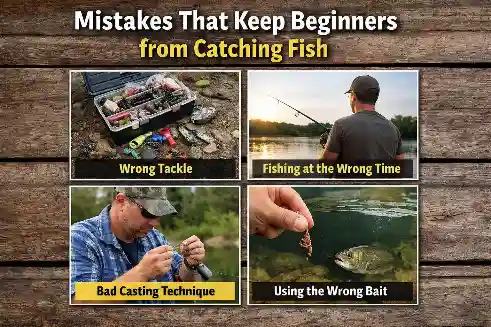
You’ll avoid years of frustration by knowing these ahead of time:
- Using a hook that’s too large. Big hooks for small fish means the fish nibbles the bait off without ever getting hooked. Start with a size 6–8 and go from there.
- Not moving enough. If you’ve fished the same spot for 30+ minutes with zero action, move. Fish aren’t obligated to swim to you.
- Fishing in the middle of the day in summer. The fish are there, they’re just 15 feet underwater, where it’s cold. Fish early.
- Setting the hook on the first nibble. Let the fish commit. Wait for the bobber to go under fully before lifting the rod.
- Ignoring knot quality. A bad knot will break at the worst possible moment. Wet your knot before tightening and test it by pulling firmly.
- Making too much noise near the water. Fish feel vibration. Heavy footsteps, splashing around, and dropping gear on a dock all spook fish.
- Only fishing in open water. Fish use structure. Cast near logs, rocks, dock pilings, and vegetation edges, not just into open water.
Catch and Release: How to Do It Right
Most states have size limits, minimum lengths below which you must release the fish. But even when you can legally keep a fish, releasing it is always an option, and doing it correctly keeps fish populations healthy for everyone.
The right way to release a fish:
- Wet your hands before touching the fish. This protects its slime coat (the mucus layer that fights infection)
- Minimize the time the fish spends out of water. 30 seconds is plenty for a photo
- Hold the fish horizontally and support its belly; never hang it vertically by the jaw if it’s over a couple of pounds
- To revive it, hold the fish gently in the water, facing into any current, and let water flow through its gills. Wait until it swims away under its own power.
- If the fish swallowed the hook deeply, don’t rip it out; just cut the line as close to the mouth as possible. The hook will dissolve within weeks.
A Simple Gear Checklist for Your First Trip
Take this with you:
- Valid fishing license (screenshot it on your phone)
- Rod and reel combo (pre-rigged at home saves time)
- Monofilament line (6 lb), hooks (size 6 and 8), sinkers, bobbers
- Fresh bait, nightcrawlers, and/or PowerBait
- Small needle-nose pliers (for hook removal)
- Polarized sunglasses (reduce glare, help you see fish)
- Sunscreen and bug spray
- Water and snacks, you’ll be out there longer than you think
- A small net makes landing fish much easier and less stressful for the fish.
- A bucket or cooler with ice if you plan to keep fish
People Also Ask: Quick Answers
Do I need a fishing license to fish in a private pond?
It depends on the state. Most states require a license even for private water. Some states exempt the landowner. Check your state’s regulations to be sure.
What is the best freshwater fish to catch for beginners?
Bluegill, hands down. They’re everywhere, they bite aggressively, and they’re forgiving of beginner technique. Catfish is a close second for pure ease.
Can I fish without a boat as a beginner?
Yes, and you should. Bank fishing from a lake, pond, or river bank is perfect for beginners. You can reach 90% of productive spots without ever getting in a boat.
What pound test line should a beginner use?
6 lb monofilament covers most freshwater fishing situations. Go up to 10–12 lb if you’re specifically targeting catfish or big bass.
How long does it take to catch a fish?
At a well-stocked pond using live bait at a good time of day, many beginners get a bite within 15–30 minutes. At a tough spot in hard conditions, it could take hours. Stack the odds in your favor: go early, use live bait, fish near structure.
What’s the best time of year to catch your first fish?
Spring, April, and May in most of the US. Fish are shallow, aggressive, and hungry after the cold months. Bluegill and bass spawn in the shallows and are easy to spot and target.
Do fish feel pain when hooked?
This is genuinely debated among scientists. Fish have nociceptors (pain-sensing cells), but their brains process stimuli differently than mammals do. The current scientific consensus is that fish experience some form of stress response, which is why proper handling and quick releases matter.
What if I can’t tie a fishing knot?
Practice. The Improved Clinch Knot is genuinely learnable in under 10 minutes. There are also pre-tied hook packs available at most stores that attach with a simple loop; these are a perfectly valid shortcut while you’re learning.
Is fishing an expensive hobby?
Your first full setup rod, reel, license, basic tackle, and bait should run $50–$100 total. After that, it’s as cheap or expensive as you want to make it.
Final Word: How to Start Fishing as a Beginner
Here’s the thing about fishing: you can read about it all day, but nothing teaches you faster than standing at the water’s edge with a rod in your hand. You’ll make mistakes. Your first cast will probably go sideways. You might not catch anything on your first trip.
That’s fine. Almost every serious angler has a story about a blank day that made them want to figure out what they were doing wrong, and that curiosity is what turns a casual outing into a lifelong passion.
Get the license. Buy the rod. Grab a carton of nightcrawlers. Find the nearest pond. Go early.
Your first fish is out there. Go get it.