
Can You Eat a Marlin? 2026 Ultimate Taste Guide
Yes, you can most definitely eat marlin!
Picture this. You have been fighting a blue marlin for three solid hours. Your arms feel like wet cement. Your hands are raw from the line. The fish finally rolls up alongside the boat, all glossy muscle and iridescent blue, and someone on the deck goes quiet for a second before asking, “So are we keeping this thing?”
Good question. Awkward timing, but good question.
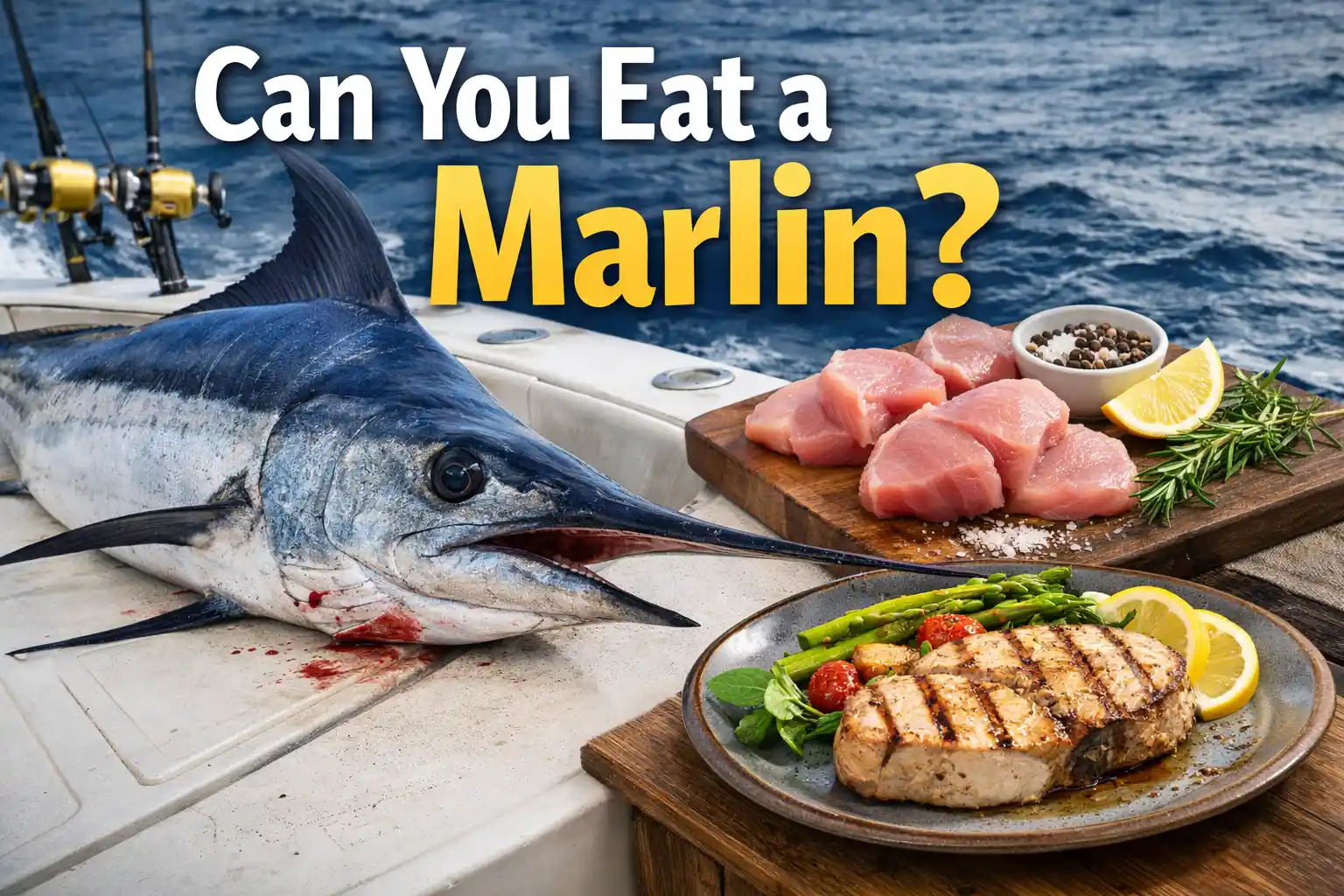
Yes, marlin is edible. People eat it all the time in Hawaii, Mexico, Japan, and plenty of fishing communities across the Pacific. But saying “yes, you can eat it” and leaving it there would be doing you a disservice. The full answer touches on flavor, mercury, how the fish was handled after it came out of the water, what species you actually caught, and whether your conscience can sit comfortably with the choice. All of that matters. This guide gets into all of it.
What Does Marlin Taste Like? No Sugarcoating
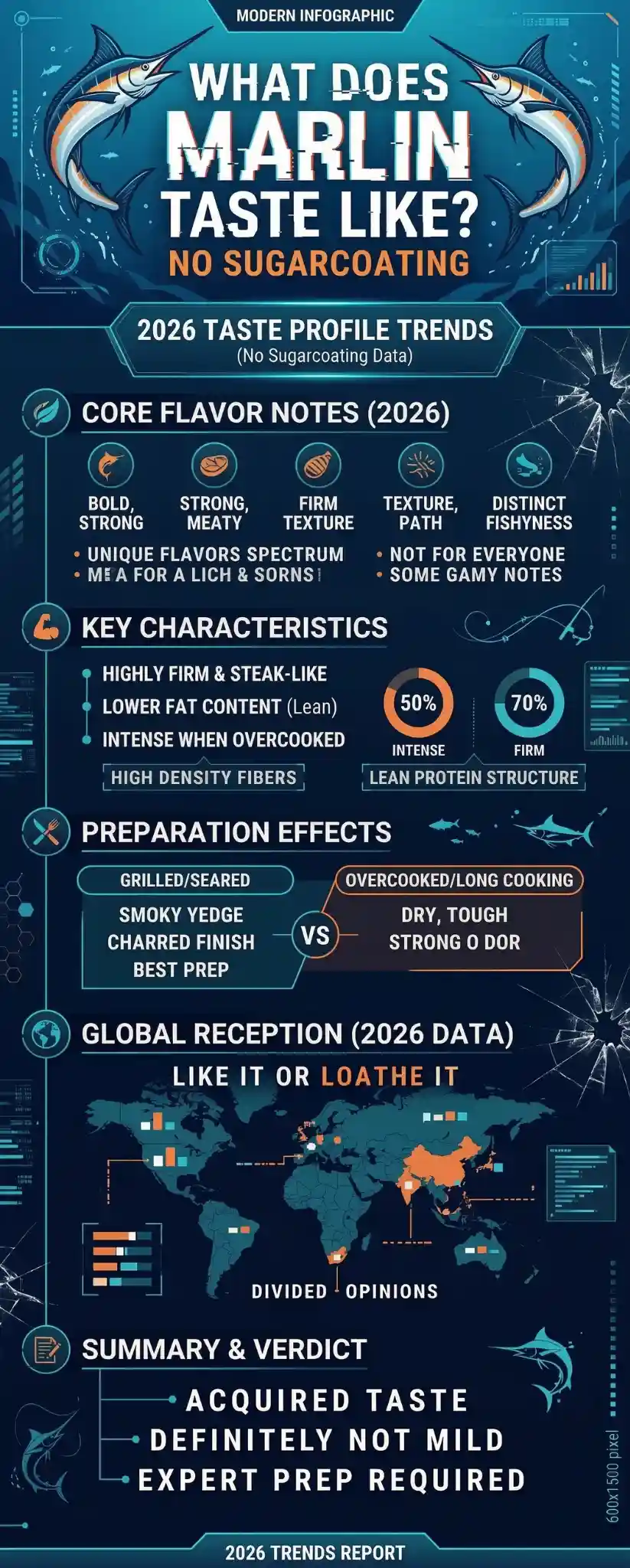
Drop any idea that marlin tastes exotic or special just because it is a big, dramatic fish. It does not. The flavor sits somewhere between swordfish and yellowfin tuna, firm-fleshed and mildly gamey, with a meatiness that holds up well to a hot grill or a smoker.
Fresh, well-handled striped marlin has a faint sweetness that surprises people. Blue marlin tends to be more savory, sometimes with a slight metallic note in larger, older fish. Neither one tastes fishy in the way that, say, bluefish or mackerel does. Gamey is the more accurate word, and even that depends heavily on what happened to the fish in the thirty minutes after it left the water.
The single biggest factor in how marlin tastes is post-catch handling. Not the species. Not the recipe. What happened on the boat? More on that shortly.
Marlin Species and How Each One Tastes
Blue Marlin: Bold, Dense, Better Smoked
Blue marlin is the species most anglers picture when someone says “marlin.” It can weigh over 1,000 pounds, though most caught recreationally run well under that. The flesh is deep pink to reddish, dense, and carries more flavor than the lighter-colored species. Some people love that intensity. Others find it too strong when grilled plain.
Smoking suits blue marlin better than any other cooking method. Markets in Kona, Hawaii, and Cabo San Lucas, Mexico, sell smoked blue marlin year-round because locals discovered long ago that smoke tames the stronger notes and brings out something genuinely good.
Methylmercury accumulation runs higher in blue marlin than in striped marlin, partly because blues live longer and grow larger. A 500-pound fish has had far more time to accumulate contaminants than a 150-pound striped marlin.
Striped Marlin: The Better Table Fish, By Most Accounts
Ask serious marlin anglers in Hawaii which species they would rather eat, and many will say striped marlin without much hesitation. The flesh is lighter in color, often orange-pink or bright red, and the flavor is cleaner than that of blue marlin. Raw, it has a sweetness that works well for sashimi.
In Japan, striped marlin goes by nairagi and commands real respect at fish markets, including the Honolulu Fish Auction, where both species get graded for color and fat content, much like tuna. Nairagi often fetches a higher price per pound than kajiki (blue marlin) because the eating quality is generally considered better.
Black Marlin: Rich Flavor, More Forgiving to Cook
Black marlin are less common in U.S. waters but appear widely across the Pacific, particularly around Australia and Southeast Asia. The fat content runs higher than that of blue marlin, which makes it harder to dry out on the grill. That extra fat also adds flavor richness that some people prefer.
If you are cooking marlin for the first time and happen to have black marlin on hand, it is probably the most beginner-friendly of the group.
White Marlin: Rarely on the Table, and for Good Reason
White marlin are the smallest of the four main species and rarely appear on anyone’s table. Conservation concerns are part of it. Atlantic white marlin populations have faced enough pressure that most serious anglers release every one they catch. Even setting aside conservation, the small size means limited yield from any individual fish.
The Mercury Issue: What the FDA Numbers Actually Mean
This section tends to get skipped or softened on fishing websites. It should not be.
Marlin averages approximately 0.485 parts per million of mercury, based on FDA testing data. Some individual fish have tested as high as 0.92 ppm. The FDA places any fish averaging above 0.46 ppm into its “choices to avoid” category for pregnant women, women who could become pregnant, nursing mothers, and children under 11. Marlin sits on that list alongside shark, swordfish, king mackerel, and orange roughy.
Why does marlin accumulate so much mercury? Bioaccumulation through the marine food chain. Marlin eat other predatory fish. Those fish ate smaller fish. Every layer up the chain concentrates methylmercury further into the tissue. Because marlin are large and live for many years, they have more time to build up what smaller, shorter-lived species could never accumulate.
For a healthy adult with no pregnancy concerns, eating marlin a few times a year appears to carry minimal documented risk. A few times a year. That is a very different situation from monthly consumption, which is again different from weekly, which is genuinely inadvisable for anyone.
H4: The Groups Who Should Skip Marlin Entirely
Pregnant women should avoid marlin without exception. Methylmercury crosses the placental barrier and can affect how the fetal brain develops. That is not a soft warning. Young children under 11 fall in the same avoidance category. Nursing mothers should also steer clear. For everyone else, the conversation becomes about how often and how much.
Why So Much “Bad” Marlin Was Actually a Fine Fish That Got Ruined
Here is something that rarely gets the attention it deserves. A lot of anglers and charter guests who have tried marlin and found it off-putting were eating fish that were mishandled after the catch. Not a fish with bad flavor. A fish that was treated carelessly in warm conditions.
The moment a marlin comes aboard, it should be bled right away through the gill arches and put into a fish box with ice or an ice-saltwater slurry. Rigor mortis changes the texture of billfish flesh the same way it works on beef. Proper chilling slows that process and preserves the quality that was there to begin with. A fish left flopping and warming on a deck for an hour before anyone thinks to put it on ice will taste noticeably worse than one handled correctly from the start.
Tournament fish that get described as gamey or unpleasant often suffer this problem. It was not the marlin. It was the thirty minutes after the marlin hit the deck.
Brining Before You Cook
Brining marlin in a simple solution of water, salt, and a small amount of sugar for 30 to 45 minutes before cooking makes a real difference. The brine pulls residual blood from the tissue, which is what creates much of the gamey character in the finished dish. It also helps the flesh hold moisture through the heat of grilling or smoking.
After brining, pat the fillets completely dry. A wet surface on a hot grill produces steam, and steam is the enemy of the caramelized outer crust that makes grilled marlin genuinely good.
How to Cook Marlin the Right Way
Grilling: The Most Common Method, Often Done Wrong
Cut marlin steaks about one inch thick. Go thinner, and the lean flesh dries out before the center cooks through. Brush both sides with olive oil. Salt, black pepper, and garlic are all you need for seasoning, though citrus zest works well with the meaty flavor. On a medium-high grill, two to three minutes per side gives a center that is slightly pink, which most people find far more pleasant than fully cooked marlin.
Overcooked marlin is a genuinely bad experience. The lean muscle fibers seize up, and the texture turns dry and chalky in a way that no amount of sauce will fix. Pull it early. Trust the carryover heat.
Smoking: The Method That Changes Minds
If you know someone who tried marlin once and decided they did not like it, there is a decent chance they had poorly handled fish cooked dry on a grill. Smoked marlin is a different thing entirely. The smoking process, whether hot smoking around 225 degrees Fahrenheit or cold smoking for a texture closer to lox, adds flavor that works with the fish rather than fighting it.
In Hawaii, smoked marlin poke shows up at local markets and grocery stores as a routine thing, not a novelty. Along Mexico’s Baja coast, smoked marlin tacos with fresh cabbage and crema are street food, cheap and available. Both traditions exist because smoking genuinely works on this fish.
To do it at home: brine for at least an hour, pat completely dry, then let the fish sit uncovered in the refrigerator for 30 minutes so a pellicle forms on the surface. That tacky outer layer is what helps smoke adhere. Apple wood or cherry wood chips pair well.
Raw Preparations: Sashimi, Poke, Ceviche
Sashimi-grade marlin from a reputable source is excellent when truly fresh. In Japan, both kajiki and nairagi appear in quality sushi restaurants, and the raw flavor of striped marlin in particular has a clean, faintly sweet quality that fans of sashimi genuinely appreciate. It is not a consolation prize for missing out on tuna.
The non-negotiable step for eating any marlin raw is proper freezing. Flash freezing at minus 4 degrees Fahrenheit or below for at least seven days kills parasitic organisms. Fish labeled “sashimi grade” from a legitimate seafood market has theoretically gone through this process. Fish you catch yourself must be frozen at the right temperature for the required time before anyone eats it raw.
Ceviche works well with diced marlin. Lime juice, garlic, red onion, cilantro, and fresh chili will acid-denature the protein over about 20 minutes, giving a texture that is tender without being cooked in the traditional sense. The bright acid also cuts through any residual richness in the fish.
Curries and Slow-Cooked Dishes
Marlin’s firm flesh holds together in extended cooking better than most white fish. Drop cubed marlin into a Goan-style coconut curry or a tomato braise, and it will stay intact where cod or tilapia would fall apart entirely. The spices do a lot of the flavor work in these preparations, which makes them forgiving even if the fish has slightly stronger notes than ideal.
Where People Actually Eat Marlin as Everyday Food
Hawaii: Where Marlin Is Taken Seriously as Food
The Honolulu Fish Auction is one of the few places outside Japan where fresh tuna and billfish get graded and auctioned at professional standards. Both kajiki and nairagi move through that auction regularly. Local poke shops across Oahu carry marlin poke alongside ahi as a matter of course, not as a special item. The Hawaii Seafood Council maintains quality standards that may help explain why Hawaiian marlin has a better reputation as table fare than fish from other regions.
Local fishermen generally consider marlin under 200 pounds to be better eating than larger fish, and that tracks with what the flavor profiles suggest about age and mercury accumulation in older, heavier fish.
Mexico’s Baja Coast: Smoked Marlin as Street Food
Mazatlán, Cabo San Lucas, Ensenada. Smoked marlin is practical, affordable food in these communities with deep commercial fishing traditions. Smoked marlin tacos and burritos are not restaurant items aimed at tourists. They are everyday food for people who have been eating this fish for generations. Plenty of Americans try smoked marlin tacos on a trip to Baja and spend considerable time afterward trying to figure out how to replicate them at home.
Japan: A Premium Ingredient With Serious Culinary Respect
Japan does not treat marlin as a novelty or a fallback ingredient. Both kajiki and nairagi appear in sushi restaurants across multiple quality tiers, graded and priced based on color, fat content, and freshness. The umami quality in raw striped marlin has genuine standing in Japanese cuisine, and the preparation methods developed there over generations reflect serious attention to handling and quality.
Should You Eat Marlin? The Sustainability Question
Blue marlin populations in the Atlantic are generally considered overfished or close to it. The International Commission for the Conservation of Atlantic Tunas (ICCAT) manages the species internationally, but population pressure from commercial bycatch and recreational fishing has been real for decades. The Monterey Bay Aquarium’s Seafood Watch program lists Atlantic blue marlin in its “avoid” category for sustainability reasons.
Striped marlin in some Pacific regions is in better shape, though catch limits and ongoing monitoring still apply. The picture varies by region of origin.
Most serious recreational anglers in the billfish world have adopted a catch-and-release practice for blue marlin specifically. Tournament kills happen, and fish in poor condition occasionally get kept, but the general culture has shifted away from bringing every marlin to the dock. That shift appears to have had some measurable positive effect on populations in certain areas over the past 20 years.
If sustainability shapes your food choices, marlin from regulated Hawaiian or Mexican commercial fisheries sits in a different category than Atlantic marlin from poorly monitored sources. The origin matters.
Marlin vs. Swordfish: An Honest Comparison
People who have eaten both ask this comparison question a lot. Both are billfish. Both have firm, steak-like flesh. Both land on the FDA’s high-mercury caution list. The actual differences come down to flavor intensity and fat content.
Swordfish flesh is paler, close to white or cream, with a milder flavor and slightly more fat than most marlin. That extra fat gives it a bit more forgiveness when cooking. Marlin flesh is darker, pinker, or redder, with a flavor that is more pronounced. Some people find that more interesting. Others find it too much.
Swordfish is far easier to find at a regular grocery store. Marlin almost never appears there. If you want marlin, you are looking at specialty seafood markets in coastal areas or fish you caught yourself. Neither fish should be eaten regularly by anyone keeping an eye on mercury exposure.
Marlin Nutrition: The Actual Numbers
A 3-ounce serving of cooked blue marlin runs about 93 calories with roughly 20 grams of protein and very little saturated fat. It provides meaningful amounts of vitamin B12, vitamin B6, niacin, and selenium. That selenium is worth noting because it binds to methylmercury in the body and may reduce how much gets absorbed. Some researchers suggest this could partially offset mercury risk in marlin consumption, though the evidence is not strong enough to treat selenium as a free pass.
Good nutritional profile. Still not appropriate as a regular protein source for anyone in a high-risk group.
Buying Marlin When You Did Not Catch It Yourself
Fresh marlin fillets and steaks show up occasionally at specialty seafood markets in Hawaii, Florida, and California. You will not find marlin at a typical Kroger or Safeway. When you do find fresh marlin, look for flesh that is firm and slightly moist without being wet, with no gray areas and no smell beyond a clean ocean scent. Any off smell is a reason to walk away.
Smoked marlin is considerably easier to source. Specialty retailers and online seafood vendors carry it, it keeps well under refrigeration, and it goes directly into tacos, poke bowls, or dips without any additional cooking.
For raw consumption, only buy from a supplier who explicitly labels the fish as sashimi or sushi grade and can describe their handling and freezing process. Vague assurances are not enough.
Practical Cooking Notes Before Your First Attempt
Marlin does not forgive distracted cooking. A handful of things matter more than any specific recipe.
Keep portions to four to six ounces per serving for healthy adults, and limit consumption to a few times per year, given the mercury picture. Brine the fish before cooking. Use a meat thermometer and pull the fish off the heat at 130 degrees Fahrenheit internal temperature; carryover heat brings it to the FDA-recommended 145. Let it rest for two to three minutes before cutting.
Anyone trying marlin for the first time would do well to start with the smoked version. The flavor is accessible rather than challenging. If you have eaten smoked salmon or smoked tuna before, smoked marlin sits in recognizable territory. It is a lower-risk way to figure out whether marlin is something you actually want to eat more of before committing to a whole fresh steak on the grill.