
How to Catch Fish in Rivers Using Simple Beginner Techniques (2026 Easy Beginner Guide)
Standing at the edge of a moving river for the first time, you get this odd mixture of excitement and confusion. The water is alive. It pushes, it swirls, it pools behind rocks, and somewhere under all of it, fish are holding position and waiting to eat. The question is where, and how do you get something in front of them?
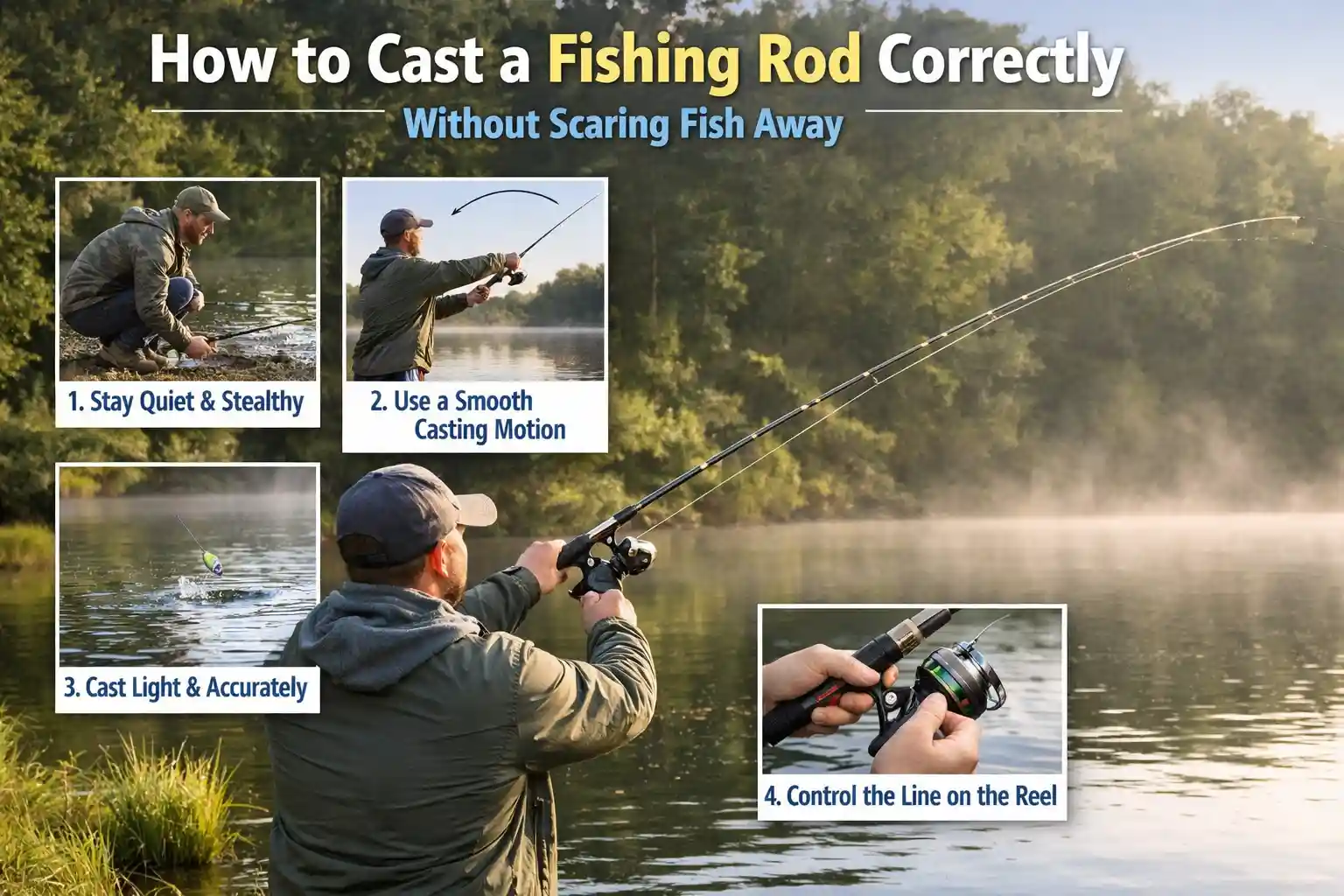
River fishing is genuinely one of the best ways to start fishing. You do not need a boat. You do not need sonar equipment. A seven-foot spinning rod, a box of hooks, a few sinkers, and a container of worms are enough to catch real fish on a real river. The challenge is not the gear. It is understanding how the water works and where fish are likely to be sitting at any given time. Once you get that, everything else falls into place faster than you expect. Follow our how to cast a fishing rod correctly without scaring fish away in 2026.
Why Rivers Are Actually Ideal for Beginners
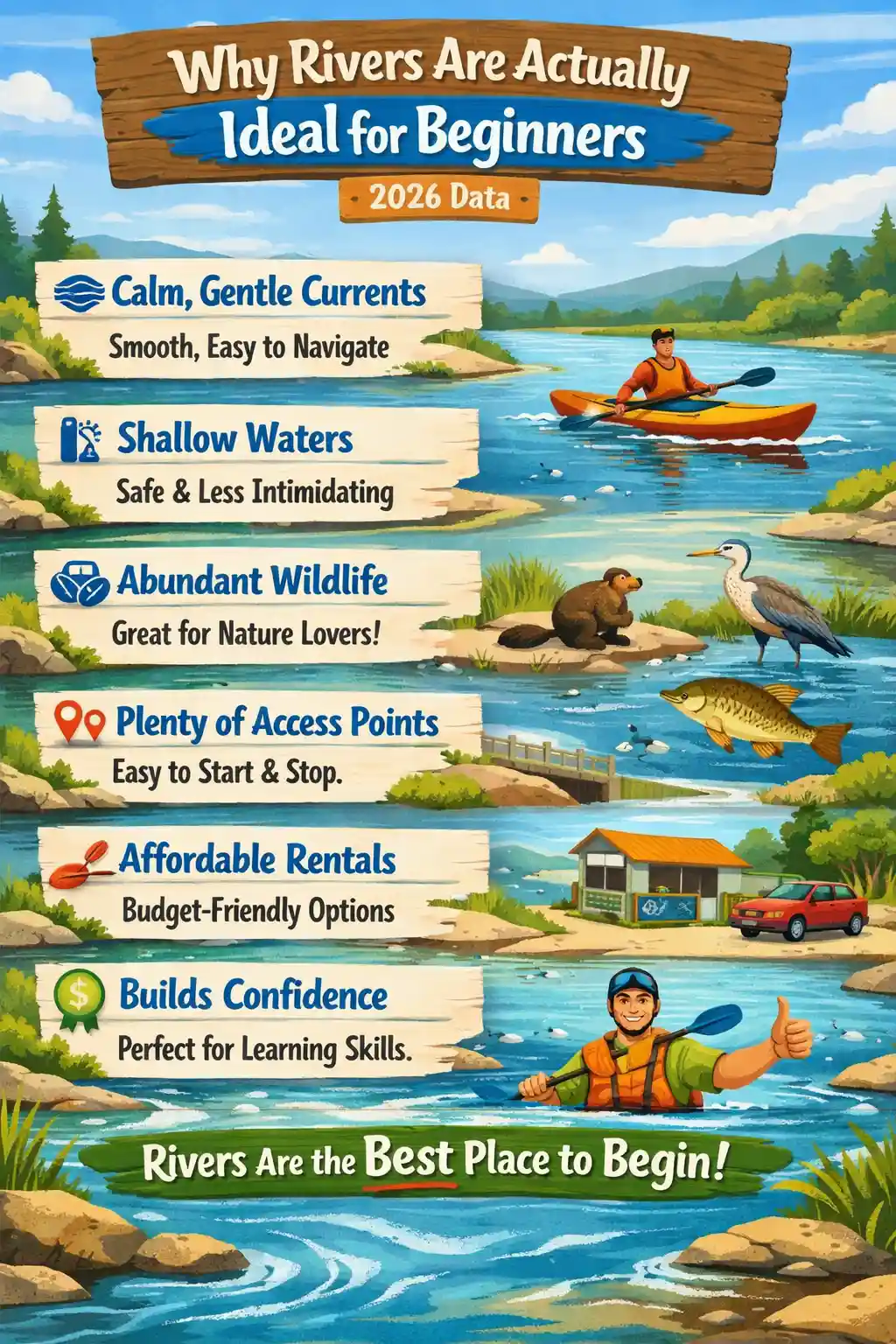
Most people assume lakes are easier. More surface area, calmer water, and fish could be anywhere. But that last part is actually the problem with lakes. Fish could be anywhere, and without expensive technology, finding them takes guesswork.
Rivers are different. The current sorts fish for you. Water moves energy, and fish use that energy to eat while spending as little of their own as possible. That behavior creates predictable patterns. Fish bunch up in specific, readable spots. You learn to see those spots with your eyes rather than with a fish finder, and that skill stays with you for as long as you fish.
Rivers also tend to hold a variety of freshwater species that beginners can target successfully. Smallmouth bass, rainbow trout, brown trout, catfish, bluegill, crappie, and channel catfish are all common river residents across the United States, and none of them require specialized techniques to catch on your first few trips.
Reading the Water: The Skill That Changes Everything
What “Reading Water” Actually Means
You will hear experienced anglers talk about reading water. It sounds like something complicated. It is not. It means looking at the surface of a river and understanding what is happening underneath based on how the water behaves.
A river is not uniform. The surface tells you about depth, flow speed, and structure below. Once you start seeing these things, you will know where the fish are before you ever cast.
Eddies: The Single Most Reliable Fish-Holding Spot
An eddy is any place where the current reverses or slows significantly. They form behind boulders, along the inside of river bends, downstream of fallen trees, and at the edge of any large object that disrupts flow. Fish sit in eddies because they get a break from working against the current, while food carried by the main current spins in and gets delivered to them.
Cast into the slow water on the downstream edge of an eddy and let your bait drift naturally. You do not need to do much. The current seam, the visible line between fast and slow water, is where feeding fish often park themselves. Work both sides of that line.
Outside River Bends Hold Deeper Water
When a river turns, the outside of that bend gets scoured by faster water over time. The result is a deeper channel, undercut banks, and excellent fish habitat. Largemouth bass, walleye, and catfish tend to stack in these deeper outside bend pools, especially in warm months. The inside of the bend will be shallower with a sandbar, which is generally less productive.
Riffles, Runs, and Pools: The Three-Part River
Most rivers follow a natural progression of water types that repeat in sequence. A riffle is shallow, fast, and broken water running over rocks or gravel. A run is the smooth, moderately paced water that follows a riffle and has more depth. A pool is the deep, slower section at the end, where the energy of the water dissipates.
Trout, particularly rainbow trout and brown trout, are often found at the tail end of a pool where it begins to shallow into the next riffle. Smallmouth bass work riffles and runs hard, especially when water temperatures are between 60 and 70 degrees Fahrenheit. Deeper pools attract catfish and carp, species that prefer slower, warmer water near the bottom.
Structure: Where Fish Hide and Wait
Structure in a river means anything that breaks the current and provides cover. Submerged boulders, fallen logs, bridge pilings, weed beds, and submerged gravel bars all count. Fish use structure to hide from predators and to ambush prey that drifts by in the main current.
The common mistake beginners make is casting directly at the structure. You want to cast upstream of the structure and let your bait or lure drift naturally toward it. A crawfish or nightcrawler drifting naturally into the shadow of a sunken log is far more convincing than one dropped directly on top of the log.
Basic Gear for River Fishing: What You Actually Need
Choosing Your First Rod and Reel
A spinning rod in the 6.5 to 7.5 foot range with a medium-light to medium power rating is about as versatile a starting point as you will find for river fishing. It handles light enough tackle to fish for trout and panfish but has enough backbone to fight a decent bass or catfish. Pair it with a size 2500 or 3000 spinning reel, and you have a combination that works in most river situations across the country.
For rivers with heavy current, slightly heavier gear makes sense. A medium-heavy 7-foot rod and a size 3500 reel with a higher line capacity gives you more control when fighting fish in faster water and make casting heavier sinker setups easier.
Line Selection for Moving Water
Monofilament in the 8 to 12-pound test range is a practical choice for beginners fishing rivers. It stretches slightly, which actually cushions the force of a fish fighting in current, so you are less likely to break the line when a fish makes a sudden run. It is also inexpensive, easy to manage, and holds knots reliably when tied correctly.
Braided line has become popular among more experienced anglers because it has almost no stretch, which increases line sensitivity and lets you feel subtle bites. At 15 to 20-pound braided line, the actual diameter is comparable to 6-pound monofilament, which means you get strength without bulk. If you go with a braid, add a 12 to 18-inch fluorocarbon leader using a double uni knot to connect the two lines. Fluorocarbon is nearly invisible underwater, which matters in clear river conditions.
Terminal Tackle: Hooks, Sinkers, and Bobbers
A simple split-shot rig covers most beginner river fishing scenarios. Thread your line through a small barrel swivel, attach a foot-long leader of 6 to 8-pound fluorocarbon, tie on a size 6 or 8 baitholder hook, and pinch one or two small split shot sinkers onto the leader about 8 to 10 inches above the hook. The sinkers keep your bait near the bottom, where most river fish feed, without anchoring it in one spot. The current carries it downstream in a natural drift.
Bobber fishing works well in slower sections. A slip bobber adjusts to any depth you set and gives you a clear visual indicator when a fish picks up the bait. In faster-moving water, a standard clip-on bobber drags across the surface in a way that looks unnatural. Stick with the split shot rig in current and save the bobber for calmer pools.
Carry a small assortment of size 6, 8, and 10 hooks. Size 10 works for bluegill and smaller trout. Size 6 handles bass, catfish, and bigger trout without issue. Carrying a few different sinker weights matters too, since heavier current needs more weight to keep your bait down.
Bait and Lures That Work for River Beginners
Live and Natural Bait: The Reliable Starting Point
Nightcrawlers are the single most broadly effective river bait in the country. Put half of a nightcrawler on a size 6 hook with a small split shot and drift it through a pool or past a boulder, and you are presenting something that practically every river fish recognizes as food. Trout, bass, catfish, carp, and bluegill all eat worms regularly. It is not glamorous. It works.
Crayfish (also called crawdads, depending on where you grew up) are the preferred food of smallmouth bass in most river systems. A live crayfish hooked lightly through the tail and drifted along the bottom in rocky water is hard to beat when smallmouth are the target. They are available at most bait shops in areas where smallmouth bass are common.
Minnows produce well for walleye, bass, and larger trout. Hook a minnow through the back behind the dorsal fin so it stays alive and active in the current. The struggling movement draws strikes. Just make sure your state regulations allow using minnows as bait before purchasing them.
Lures Worth Carrying
In-line spinners like the Rooster Tail or Mepps Aglia in sizes 1 through 3 are among the most effective lures ever designed for river fishing. The spinning blade creates flash and vibration that trout and bass react to instinctively. Cast upstream at a 45-degree angle and reel back at a pace that keeps the blade spinning. In clear water, silver or gold blades produce well. In stained or off-color water, chartreuse or orange bodies draw more attention.
Ned rigs, which are a small mushroom-shaped jighead with a short soft plastic stick bait, have earned a strong reputation in river systems for bass, walleye, and even catfish. Cast one into the eddy behind a boulder, let it sink to the bottom, and give it a light shake before slowly retrieving. Fish pick up ned rigs because the presentation sits tail-up on the bottom, which looks exactly like a small creature feeding.
Small crankbaits in the one-quarter to three-eighths ounce range work well in moderate current along the edges of pools and near structure. Diving bills on crankbaits help get the lure down in the water column where fish are holding without adding extra weight to your line.
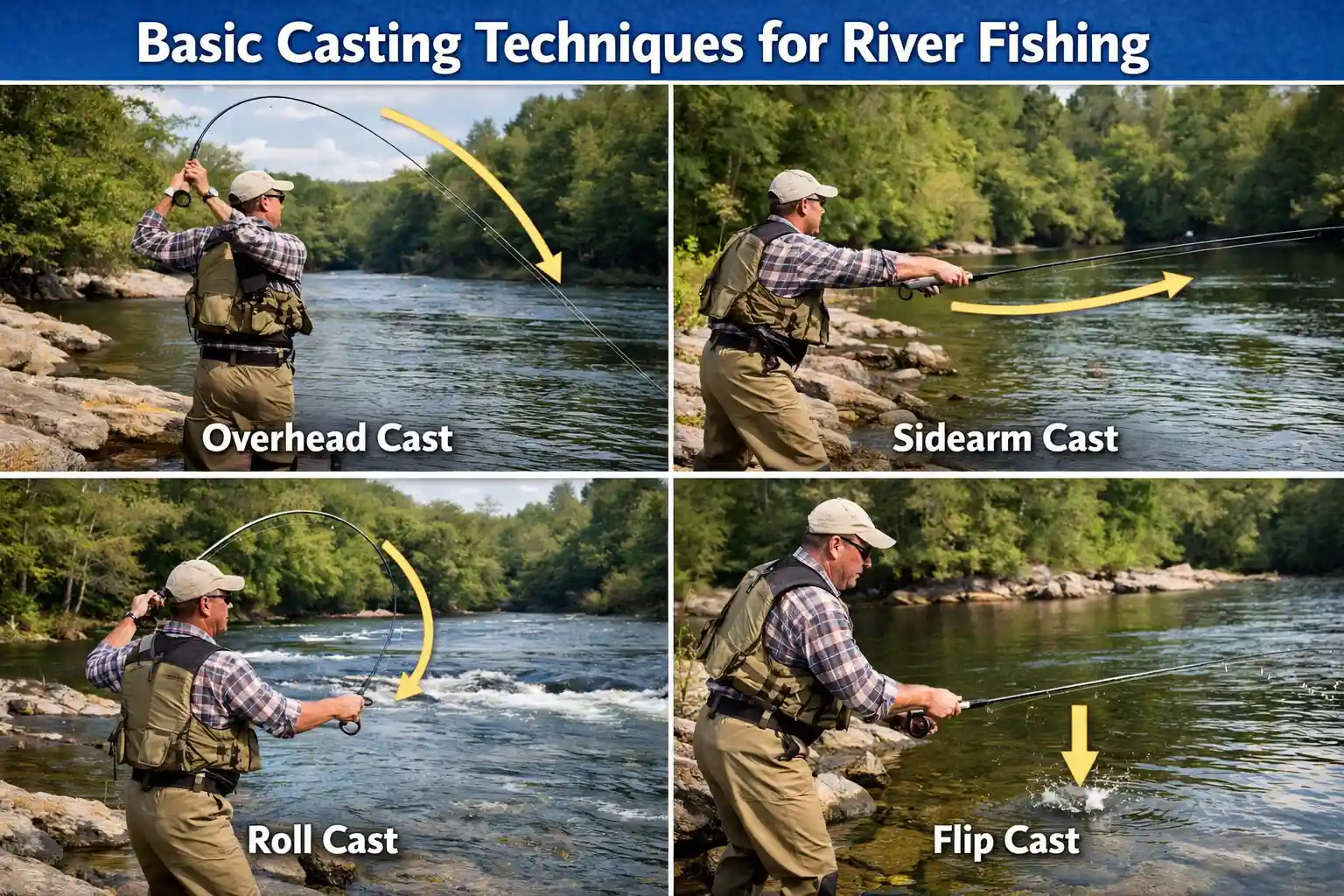
Basic Casting Techniques for River Fishing
The Upstream Cast
Casting upstream and letting your bait or lure drift naturally downstream with the current is the foundation of river fishing technique. It mirrors how actual food items, insects, crayfish, and small baitfish behave in moving water. Fish are almost always facing upstream, waiting for food to come to them. An upstream cast presents your offering in the direction they are already looking.
The retrieval is slower than most beginners expect. You are reeling just fast enough to stay in contact with the lure or bait and feel bites, not fast enough to drag it unnaturally against the current. In very fast water, you might barely reel at all and just follow the drift with your rod tip.
Across and Downstream Presentations
Casting across the current and letting the bait swing downstream in an arc is called a drift cast or swing presentation. It covers water efficiently and works particularly well for trout with wet flies or spinners. The lure or bait moves from slower water at the end of the swing back toward the current edge, which is exactly where fish are often holding.
Casting downstream and retrieving upstream against the current is less natural for most river fish, though it can produce in certain spots where the geometry of the water pushes fish to face in unexpected directions. Use it when an upstream or cross-current cast is not possible due to obstacles behind you.
Wading: Getting Better Position
Wading puts you in the river rather than on the bank, and it opens up casting angles and access to spots that are simply impossible from shore. Start in water no deeper than knee height until you get comfortable with the footing. River bottoms can be uneven, and the current creates a surprising amount of force against your legs even at low depths. Felt-soled wading boots or boots with rubber studs give you grip on slippery rock. Always check your footing before shifting your weight.
Move slowly when wading. Fish can feel vibration through the water, and heavy footsteps in a riffle will alert fish downstream before you ever make a cast. The quieter you wade, the better your results.
Fishing for Specific Species in Rivers
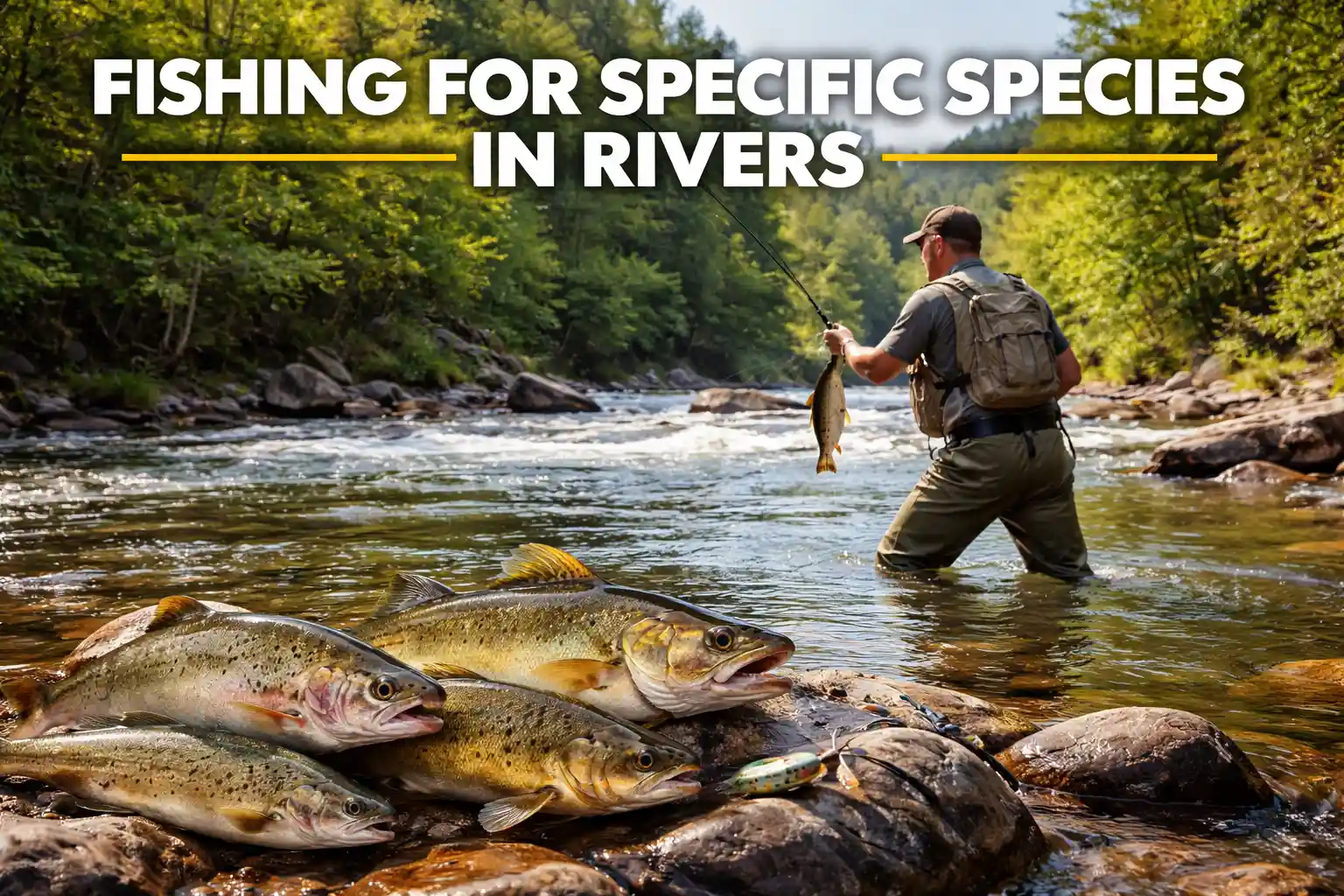
Trout in Moving Water
Trout, whether rainbow, brown, or brook, are the species most associated with river fishing in the United States. They feed aggressively when conditions are right and put up a fight well above their size when hooked on light tackle.
Water temperature matters more for trout than almost any other variable. Rainbow trout feed most actively between 55 and 65 degrees Fahrenheit. Below 45 degrees, feeding slows considerably. Above 68 degrees, trout become stressed and should be released quickly if caught. Carry a small stream thermometer when targeting trout, and check the water before spending hours on a stretch that is too warm.
Focus casts on the tail end of pools where the water starts to speed up, along current seams at the edge of fast water, and in the shadow of any large boulder in moderate current. Trout face upstream, watching for aquatic insects and small fish to drift by. A natural drift through these zones with a small spinner, a nymph, or a piece of worm produces results on most rivers with a healthy trout population.
Smallmouth Bass in Rivers
Smallmouth bass are arguably the most exciting fish a beginner can target in moving water. They fight far harder than their size suggests, they are visual predators that respond to a wide range of lures, and they live in many of the same rivers that hold trout.
Look for smallmouth in rocky riffles and runs, behind large boulders, and along gravel bars where the bottom changes composition. In summer, they move into faster water to feed actively. In early spring and late fall, they shift to deeper pools and slower sections.
Crayfish imitation lures, tube jigs, and in-line spinners all work well for river smallmouth. Work the lure slowly along the bottom in areas with rocky structure. A fish that hits a crayfish imitation near a boulder in two feet of water and then runs downstream into the current is a fight you will remember.
Catfish in River Systems
Channel catfish and flathead catfish are bottom dwellers that use their lateral line and sense of smell to locate food in the dark or in murky water. They feed most actively at night and in the early morning. Cut bait from an oily fish like shad or skipjack, chicken liver, and prepared stink baits all work for channel cats.
Find the deepest pool in your section of river and fish the bottom with a Carolina rig or a simple slip sinker rig that lets the catfish pick up the bait and move with it slightly before feeling resistance. Let the fish take line for a few seconds after the bite before setting the hook firmly. Channel catfish in rivers often run larger than the ones you catch in ponds, and they put up a strong, head-shaking fight at the end of a hook.
When to Fish: Time of Day and Season
Early Morning and Evening Give You an Edge
The single most consistent timing pattern in freshwater fishing is that fish feed most actively during low-light periods. Sunrise and the hour following it, and the two hours before sunset into early dusk, both tend to produce more strikes than midday fishing in most conditions.
The reason is water temperature and predator visibility. During peak summer heat, the surface temperature of a river rises through midday, slowing the metabolism of cold-blooded fish. At first light, the water is at its coolest from overnight, oxygen levels are higher, and insect activity that triggers trout and bass to feed is at its peak. Aquatic insect hatches in particular, where clouds of mayflies or caddisflies emerge from the water, happen most often in early morning and again in early evening. When a hatch is on, fish that were sitting still in deep water suddenly move to the surface and feed aggressively.
Seasonal Patterns That Matter to Beginners
Spring, when water temperatures climb into the upper 50s from winter cold, triggers feeding activity that borders on aggressive. Fish that spent winter conserving energy begin actively chasing food across multiple species. Pre-spawn bass feed heavily in March and April across most of the U.S. Brown trout and rainbow trout are active in spring as invertebrate populations in rivers surge.
Summer produces good fishing in the early morning and evening, but it can be slow in the heat of the day on many rivers. Targeting deeper, shaded pools during midday in summer often produces results when bank-exposed shallows go quiet.
Fall is underrated. As water temperatures drop from summer highs back into the productive 55 to 65 degree range for trout and bass, feeding activity picks up across the board. Fish are feeding to build reserves for winter. Brown trout in particular feed aggressively through October and November on many river systems.
What to Know Before You Go: Regulations and Safety
Fishing Licenses and Regulations
Every state in the U.S. requires a valid fishing license for anglers age 16 and older. Some states have different license structures for residents and non-residents. License fees fund fish stocking, habitat restoration, and the management programs that keep public rivers fishable. Buy your license at a sporting goods store, a bait shop, or directly through your state’s fish and wildlife agency website before you wet a line.
Regulations vary by river and by species. Some rivers have catch-and-release only stretches for trout. Others restrict bait types or set minimum size limits. Knowing the regulations for the specific river you plan to fish matters and is worth the five minutes it takes to look them up.
Wading and Bank Safety
Wet rocks in rivers are slippery in a way that dry rocks are not. What looks like solid footing can give way instantly. If you plan to wade, move deliberately. Keep your feet wide apart for stability and use a wading staff in unfamiliar or fast water. Never wade alone in a river you do not know.
Check water levels before going. Rivers rise fast after rain, and a stretch of knee-deep water can become thigh-deep and dangerously fast within a few hours of a storm upstream. Many state fish and wildlife agencies publish real-time stream gauge data online. USGS also maintains gauges on most major rivers accessible through their website. A quick check before you leave home can prevent a dangerous situation.
Catch and Release: Doing It Right
Releasing a fish correctly matters for the fish population and for the quality of fishing on public rivers that everyone shares. Keep the fish in the water as much as possible during hook removal. Wet your hands before handling to protect the protective mucus coating on the fish’s skin. Use needle-nose pliers or a hook remover for hooks that are deeper than the lip.
If a fish is exhausted from the fight, hold it gently in the current with one hand under the belly and one near the tail. Facing it upstream so water runs through the gills, wait until the fish kicks and swims away on its own, rather than releasing it before it recovers. A fish dropped into still water while still disoriented may roll and die rather than swim down.
Barbless hooks or hooks with the barb pinched flat with pliers make removal faster and less damaging to the fish. Many trout rivers in the western U.S. require barbless hooks on designated catch-and-release stretches.