
How to Catch Fish in Rivers Using Simple Beginner Techniques (3 Simple Techniques for Beginners)
You drove to the river, set up your rod, and stood there for two hours. Nothing pulled on the line. Not even a nibble. You watched a guy 50 yards upstream pull out fish after fish, and you had no idea what he was doing differently.
That’s not bad luck. That’s missing information. And this guide is going to fix that.
River fishing is one of the most accessible and rewarding ways to fish in the United States. No boat, no sonar, no $400 rod required. But the river is not random. Fish are sitting in very specific places for very specific reasons, and once you understand those reasons, you’ll stop guessing and start catching.
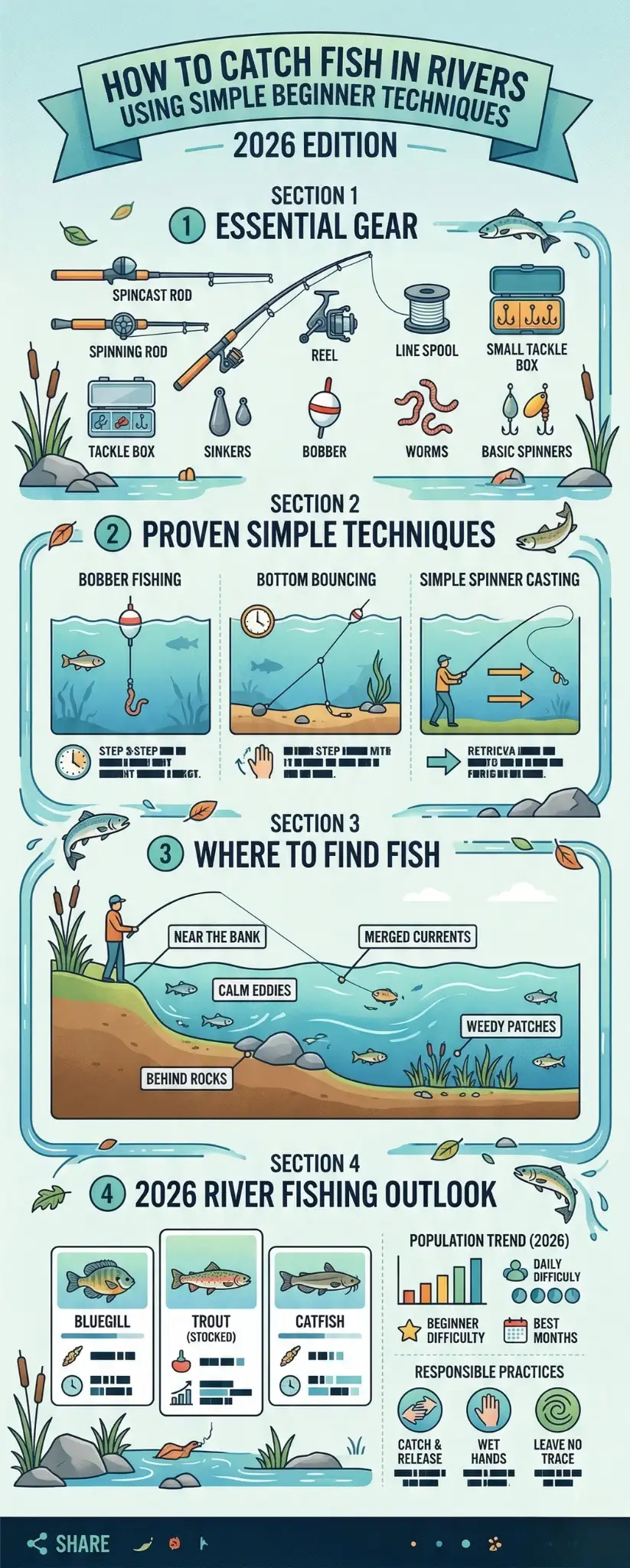
This guide covers everything: how moving water works, where river fish hide, what beginner fishing gear you actually need, which fishing rigs to build, how to cast them correctly, and what to do after you catch something. By the time you finish reading, you’ll have a plan for your next trip that’s completely different from the one that got you skunked.
Why Rivers Are Perfect for Beginners
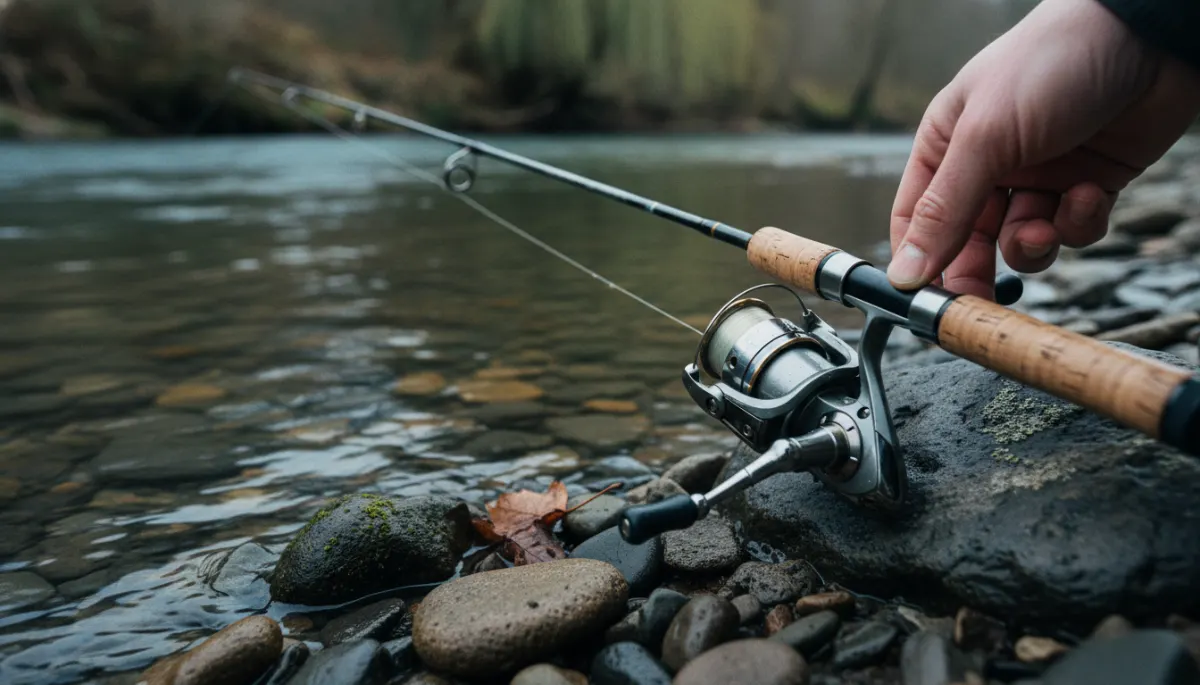
No boat required. Some of the most productive river fishing spots sit right against the shoreline, under overhanging brush, or along shallow gravel bars. You can reach them with both feet on dry ground.
Low startup cost. A complete beginner setup costs between $25 and $55 total. More on that in the gear section.
High species variety. Rivers across the US hold largemouth bass, smallmouth bass, rainbow trout, brown trout, channel catfish, bluegill, crappie, walleye, and common carp in the same water. You don’t need to specialize on day one.
Year-round access. Rivers with moderate flow stay fishable in most of the country through fall and winter, with species like brown trout and channel catfish biting even in cold temperatures.
It teaches core skills fast. Reading water current, presenting live bait naturally, and detecting bites on moving water are skills that transfer to every other kind of fishing you’ll ever do.
How Fish Use River Current (This Is the Key to Everything)
Picture this: you just ran a marathon. Would you stand in a windstorm to eat lunch, or would you duck behind a building out of the wind and eat it there? Fish think exactly the same way.
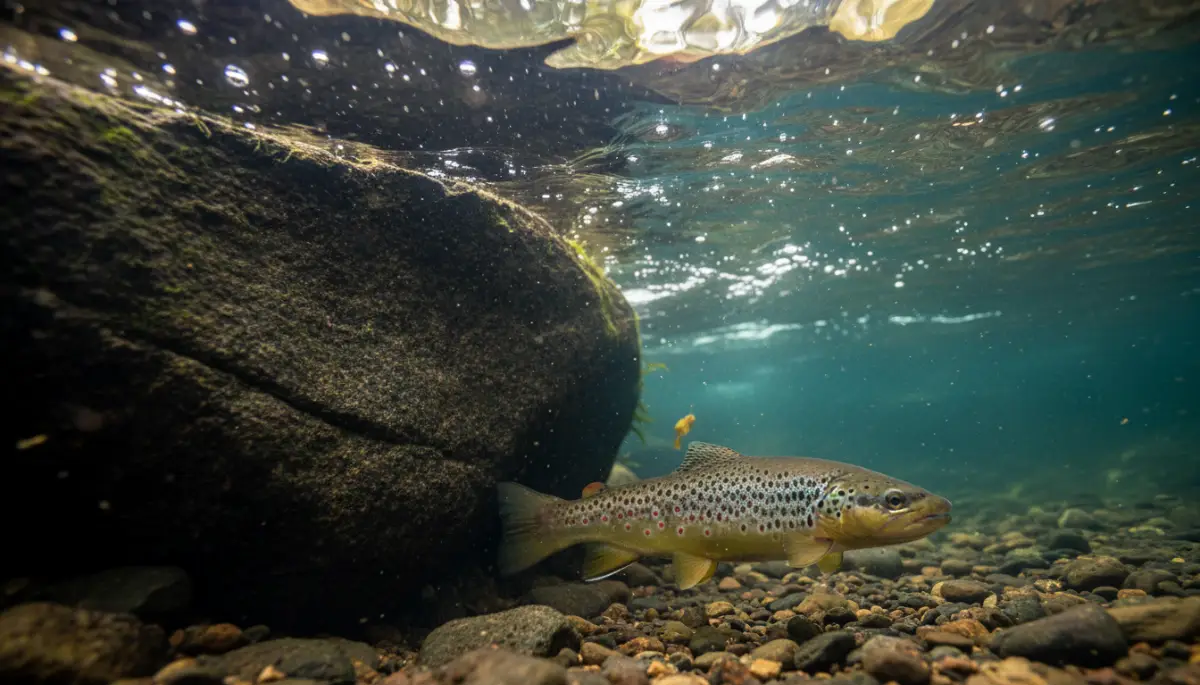
River current burns energy. A fish sitting in the middle of the strongest main channel flow burns calories constantly just to hold position. So instead, fish sit in the calm or slower water right next to the fast water, where food gets delivered to them by the current without the fight.
That delivery system is what makes current seams so important. A current seam is the line on the water’s surface where fast water and slow water meet. You can see it as a subtle change in ripple texture, sometimes as a line of foam or floating debris running downstream. Fish position themselves right on the slow-water side of that line, facing upstream, watching food tumble past in the current.
Once you see your first current seam clearly, you will spot them everywhere: behind every rock, along every bank, at every bend, where any feeder stream joins the main river. Each one is worth a cast.
Where Fish Actually Hide in Rivers: The 5 Locations That Matter
Eddies
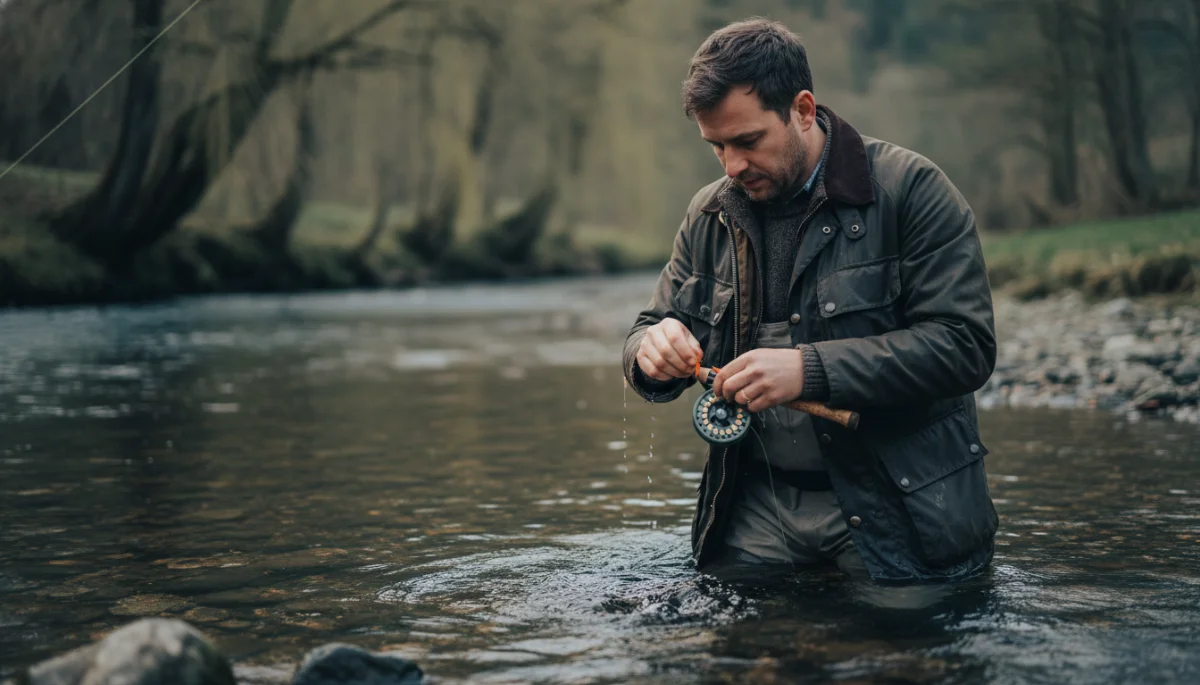
An eddy forms when water hits an object, splits around it, and curls back on itself downstream. The water inside spins slowly in a circular pattern. Fish park in eddies because the current there is nearly nonexistent, food collects along the eddy edge, and they have a clear view of the current seam nearby.
To fish an eddy correctly, cast slightly upstream of the rock or structure creating it. Let your bait drift around the upstream edge and settle into the calm water. That’s where the fish are waiting.
Deep River Pools
River pools form at the outside of river bends where the current scours the bottom deep over time. During hot summer afternoons, big bass and catfish drop into those pools for cooler temperatures and low light. Come back at dawn and dusk, and those same fish are up feeding aggressively on the pool edges.
Laydowns and Fallen Trees
Any time a tree falls into a river, it creates a current break, shade, and cover from aerial predators like herons. Fish congregate around laydowns the way people gather around a campfire.
Fish the downstream side of the laydown first. That’s the eddy zone. Cast as close to the wood as you can without snagging. The fish are practically touching the structure.
Current Seams Along Bluff Walls
Smallmouth bass love long, slow lanes of water that form right against rocky bluff walls. The wall provides shade and cover, and the slower water at its base is ideal for holding water with a direct edge to the faster current. Cast parallel to the wall and work your bait along the full length of the structure.
Riffles
Riffles are shallow, fast, rocky sections that look like terrible fishing water. But they’re loaded with aquatic insects, small crawfish, and minnows. Rainbow trout and smallmouth bass feed heavily along riffle edges, especially in the morning. Target the deeper slots between larger rocks and the calmer tail of the riffle where it deepens into the next pool.
How to Visually Identify Good Fishing Spots (What No One Else Explains)
Most fishing guides tell you to ‘look for eddies’ and stop there. Here’s what to actually look for when you’re standing on the bank:
Foam lines: Foam collects on the surface wherever two currents meet. A line of foam running downstream sits right on top of a current seam. Fish it.
Surface ripple changes: Stand back from the bank and look at the whole water surface. Where choppy water transitions to smooth water, the bottom is dropping, or the speed is changing. The smooth side holds fish.
Color shifts: Deeper water looks darker. A sharp color shift from light brown-green to dark blue-green tells you the bottom is dropping away fast. Fish drop into that depth during midday.
Trailing bubbles: A line of tiny bubbles extending downstream from a point tells you there’s a submerged rock creating an eddy. Cast right behind that point.
Herons: A heron standing completely still in the shallows is hunting. Where a heron hunts, there are fish. Note those spots.
Complete Beginner Gear List with Real Costs
One of the most common questions beginners ask is: how much is this actually going to cost? Here’s the honest breakdown, item by item:
| Item | What to Buy | Cost Range |
| Rod and reel combo | 6-7 ft medium spinning combo (Shakespeare, Zebco, or Ugly Stik) | $25 to $45 |
| Fishing line | 8 lb monofilament, 200 yards | Pre-spooled or $5-$8 |
| Hooks | Size 6 and 8 baitholder hooks, 2 packs | $2 to $4 |
| Split shot sinkers | Assorted size pack | $3 to $5 |
| Slip bobbers | 4-pack | $3 to $5 |
| Needle-nose pliers | Basic fishing pliers | $4 to $8 |
| Nightcrawlers | One container of bait | $3 to $5 |
| State fishing license | Check your state wildlife site | $15 to $35/year |
| Total Cost Without License
Approximately $40 to $72. Add a license, and you’re still under $110 for a complete, functional beginner setup. You do not need anything else for your first full season of river fishing. |
Choosing Your Rod and Reel
A medium-action spinning rod in the 6 to 7-foot range is the right choice for beginners. Medium action means the rod bends in the upper third under pressure, giving you casting accuracy and enough backbone to handle fish from 6-inch bluegill to 5-pound catfish. Look for a 2500 or 3000-size spinning reel to match.
What Line to Use
8-pound monofilament is the right starting choice. It’s forgiving, cheap to replace, and easy to tie knots with. In very clear water rivers with spooky trout, drop to 6-pound. In deep, murky water, targeting catfish, a 10-pound is fine. Skip braided line until you’ve fished 10 to 15 times and understand how to manage it.
The 3 Best Fishing Rigs for River Beginners (Step-by-Step Assembly)
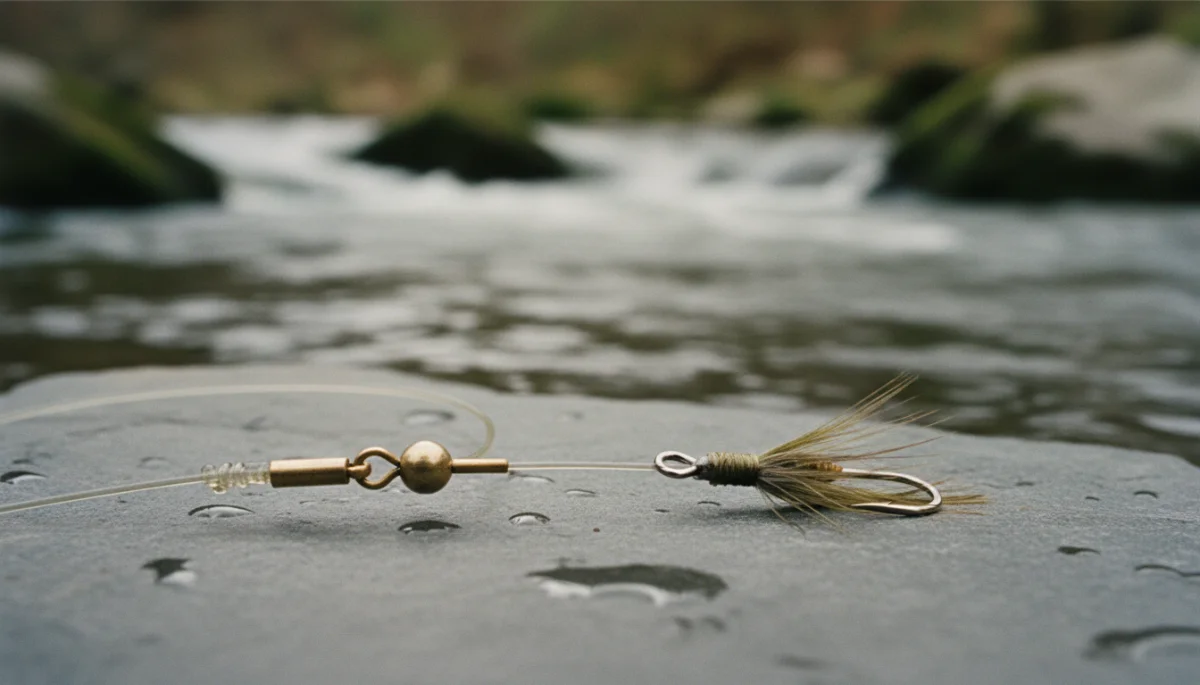
No competitor currently ranking for this keyword explains how to actually build these rigs from scratch. Here’s exactly how.
Rig 1: The Basic Float Rig (Bobber Setup)
This is the right first rig for 90% of beginner situations.
| What You Need
One slip bobber One small barrel swivel (size 10 or 12) Two split shot sinkers One size 6 or 8 baitholder hook |
How to build it:
- Thread your main line through the slip bobber from bottom to top.
- Tie the main line to the barrel swivel using an Improved Clinch Knot (instructions below).
- Cut 18 to 24 inches of line and tie one end to the swivel and the other end to your hook.
- Pinch one or two split shot sinkers onto the leader about 8 to 12 inches above the hook.
- Set the bobber stopper so the float sits at your target depth on the main line.
Set the depth so your hook rides 6 to 12 inches off the bottom. Thread a nightcrawler through the hook, leaving a tail dangling. Cast upstream. Watch the bobber drift downstream. When it dips or twitches sideways, lift the rod tip firmly.
Best for: Trout, bass, and bluegill in moderate current near eddies, seams, and pools.
Rig 2: The Bottom Rig (Sinker and Hook)
The go-to setup for catfish and carp. Slide an egg sinker onto your main line (it slides freely, which matters). Tie the main line to a barrel swivel. Tie an 18-inch leader to the other side of the swivel. Tie on a size 1 or 1/0 hook.
Cast to the deepest part of a pool or the downstream tail of a river bend. Set the rod, tighten the line slightly, and watch the rod tip. When a catfish takes the bait, the tip will bounce rhythmically. Let it load for 2 to 3 seconds, then sweep the rod firmly to the side. Best bait: chicken liver, nightcrawlers, or cut shad.
Rig 3: The Carolina Rig for Drifting Soft Plastics
Slide a 1/4-ounce bullet weight onto the main line, add a glass bead behind it, tie on a barrel swivel, attach an 18-inch fluorocarbon leader, and rig a 1/0 hook with a soft plastic crawfish or curly tail grub.
Cast upstream toward the structure. Let the weight bounce along the bottom as the rig drifts. The leader keeps the soft plastic just above the riverbed, right in the strike zone for smallmouth bass and largemouth bass holding near the bottom.
The Two Knots Every Beginner Needs to Know
You only need two knots to start fishing. Learn these two, and you’re covered for years.
The Improved Clinch Knot
- Run 6 inches of line through the eye of the hook.
- Wrap the tag end around the standing line 5 times.
- Pass the tag end back through the small loop right behind the hook eye.
- Pass the tag end through the big loop you just created.
- Wet the knot with saliva, then pull both ends tight simultaneously.
- Trim the tag end close.
The Improved Clinch Knot holds close to 95% of line strength when tied correctly on monofilament and never slips.
The Palomar Knot
- Double 6 inches of line and run the loop through the hook eye.
- Tie a loose overhand knot with the doubled line.
- Pass the hook through the loop at the end.
- Wet the knot and pull both the tag end and the main line tight together.
- Trim the tag end.
The Palomar Knot is arguably stronger than the Improved Clinch. Once you’ve tied it a few times, it takes about 10 seconds.
Simple River Fishing Techniques That Actually Produce
Upstream Casting and Drift Fishing
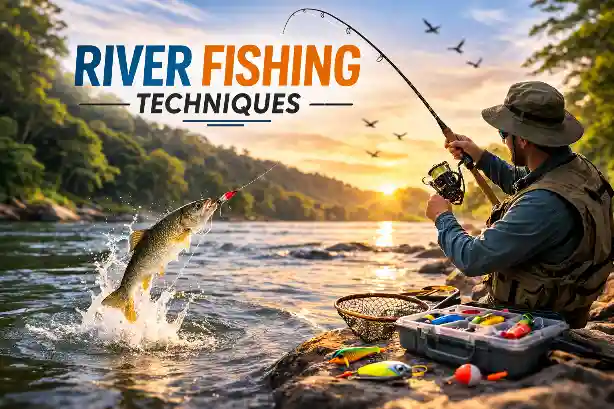
Cast your bait at a 45-degree angle upstream of your target spot. As it drifts downstream with the current, reel in slack line slowly to stay in contact with the presentation. Let the bait drift all the way through the zone naturally, past your position, then pick up and cast again.
This is the fundamental river fishing technique because it matches how food actually moves in a river. Aquatic insects, small crawfish, and minnows all travel downstream. Fish face upstream, expecting food to come toward them. A bait drifting downstream looks completely natural. A bait dragged upstream against the current looks like nothing any fish has ever seen.
For trout fishing, pair this with in-line spinners like a Mepps Aglia or Rooster Tail. Cast upstream, let the spinner sink slightly during the drift, and reel at a pace that keeps the blade turning.
Float Fishing in Current
Set your depth so the bait rides just above the bottom. Cast upstream of the target zone and let the current carry the float naturally through the current seam, eddy, or pool you’re targeting.
The key mistake beginners make is letting the float drag unnaturally. If there’s a visible wake behind your fishing bobber as it drifts, your line has too much tension, and the bait is dragging. Open the bail slightly and let out a little slack. A natural drift means the float moves at exactly the same speed as the current with no pull from the line.
Bottom Fishing for Catfish and Carp
Cast your bottom rig to the deepest part of a pool and wait. The deepest point of the outside river bend is almost always the right spot for daytime catfish in summer. The mouth of a slow backwater where it meets the main channel is a prime carp location.
Jigging Near Structure
Grab a 1/8 or 1/4-ounce ball-head jig tipped with a curly tail grub or use the Ned Rig setup with a small stick bait on a mushroom-head jig. Cast to the downstream side of a boulder or directly at a bluff wall. Let it sink to the bottom. Hop it twice with the rod tip, let it fall again.
Most strikes on a jig happen during the fall. If you feel anything different, anything that feels like the line went unexpectedly slack or a light tap, set the hook immediately. That was a bite.
Common Beginner Mistakes That Are Silently Killing Your Catch Rate
Standing Too Close to the Water
This costs beginners more fish than anything else combined. You walk up to the bank and stop at the edge. Your shadow crosses the water. Your footsteps vibrate through the bank. Every bank-holding fish within 15 feet is gone before your bait hits the water.
Walk quietly. Stay 10 to 15 feet back when you first arrive at a spot. Scan the water from a distance. Only approach the edge when you need to cast, and do it slowly.
Casting Downstream and Dragging Bait Back
Natural food travels downstream. The moment you cast downstream and retrieve upstream, everything looks wrong to a fish. Cast upstream or at a 45-degree angle across the river current. Let the presentation work with the flow.
Too Much Weight on the Rig
Beginners pile on split shot sinkers, thinking the current will drag everything away. The result is a bait that sits completely still and unnatural on the bottom. A nightcrawler that can move freely in the current triggers far more strikes. Start with less weight than you think you need.
Leaving a Spot for Hours with No Action
Give a spot 15 to 20 minutes. If nothing bites, move. River fish concentrate in specific locations. An empty spot is an empty spot. A better spot might be 50 yards away.
Ignoring Water Levels
A flooded river running 3 feet over normal level fishes completely differently than the same river at a normal level. In high water, fish move to the bank edges and slack backwaters to avoid heavy current. In low, clear water, fish go deep and get spooky.
Check the USGS Water Resources gauge at waterdata.usgs.gov before every trip. It’s free and takes 30 seconds.
How to Handle and Release Fish the Right Way
Wet your hands before you touch any fish. Dry hands strip away the protective slime coat that shields fish from bacteria. This is non-negotiable if you’re releasing the fish.
Support the body. Never hold a fish vertically by the gill plate or dangle it by the line. Support its weight with your hand under the belly, especially for fish over a pound.
Keep it in the water. A fish held out of water starts experiencing oxygen deprivation within 30 seconds. Take your photo quickly and get it back.
Revive before releasing. Hold the fish upright in the current with one hand under the belly. Let water flow through the gills. When the fish kicks and moves on its own, open your hand. Do not throw it back. Let it leave on its own terms.
Remove the hook with pliers. If a fish has swallowed the hook deeply, cut the leader close to the hook. The hook will dissolve in a few weeks. Digging for a deep hook kills the fish.
Best Times to Fish Rivers: A Practical Guide
Time of Day
Dawn to 9 AM: The single most productive window for river bass, trout, and bluegill. Light is low, water temperatures are coolest, and baitfish are active near the surface.
Two hours before sunset until dark: The second-best window. Fish that dropped deep during midday heat move back up to feed in the cooling water.
Midday in summer: The slowest period by far. Fish only with deep bottom rigs in the deepest pools.
Seasonal Guide
Spring: The best season for beginners. Water temperatures climbing through 55 to 70 degrees trigger active feeding in nearly every species. Bass move toward spawning areas in shallow gravel beds and are extremely aggressive.
Summer: Fish the edges of the day. Target shade and depth at midday. Focus on deep outside river bends and cool tributary mouths.
Fall: Fish feed heavily before winter. Bass, catfish, and carp are all especially active in October and early November.
Winter: Slow but not dead. Deep pools and slow eddies still hold fish. Brown trout and channel catfish are the most active species in cold water.
Weather Conditions Quick Guide
| Condition | What to Do |
| Overcast sky | Fish all day. Fish are active at all depths, and the bite stays consistent. |
| Light rain | Fish aggressively. Feeding activity spikes as rain washes food into the water. |
| First hours post-heavy rain | Fish bank edges and backwaters. The main channel is too fast and off-color. |
| 1 to 3 days after flood (clearing water) | One of the best fishing windows of the entire year. |
| Sunny and bright midday | Go deep and fish structure and shade. |
| Cold front passing through | Slow down, fish deep, reduce bait size. |
Fish Species Guide: What You Will Catch and How to Target Each One
Largemouth and Smallmouth Bass
Largemouth bass prefer slower sections with heavy cover: laydowns, undercut banks, backwater sloughs. Target them with nightcrawlers under a float, soft plastic worms on a Carolina rig, or spinnerbaits near structure.
Smallmouth bass are the river specialists of the two. They prefer rocky rivers with moderate current, riffles, and bluff walls. Pound for pound, smallmouth are among the hardest-fighting fish in freshwater.
Rainbow and Brown Trout
Rainbow trout prefer cooler water and are most active in mountain rivers, stocked trout streams, and tailwater fisheries below dams. Fish nightcrawlers under a float, in-line spinners upstream, or PowerBait on a bottom rig near the current edge.
Brown trout favor undercut banks, deep pool edges, and low-light conditions. They’re more challenging but respond to the same presentations in slower, more deliberate drifts.
Channel Catfish
Channel catfish hold in deep pools, below wing dams, in tributary mouths, and behind large boulders. They feed most aggressively after dark. A 5-pound catfish on spinning tackle will run and fight in a way that genuinely surprises most beginners.
Bluegill and Sunfish
The best beginner fish in any river. They’re everywhere, they bite all day, they’re easy to hook, and they taste great fried. A size 8 hook with a small piece of nightcrawler under a float catches them in nearly any river with slow or moderate current near bank vegetation.
Common Carp
Carp are massively underrated in the US. They grow to 15, 20, even 30 pounds in large rivers and fight with a power and endurance that will absolutely rewrite your expectations. A basic bottom rig baited with sweet corn, bread, or commercial carp dough bait near a slow backwater is all it takes. On 8-pound mono, a big river carp is a full-body workout.
Free Tools Every Beginner River Angler Should Use
No competitor currently ranking for this keyword mentions any of these tools. Here they are:
| USGS Water Resources: waterdata.usgs.gov
Free, government-run river gauge data for thousands of rivers across the US. Check the water level and whether it’s rising or falling before every single trip. Takes 30 seconds and changes every decision you make. |
Google Maps Satellite View: Pull up satellite view and zoom into the river before you drive there. You can see bends, wide deep sections, riffle areas, and access points from home. Scout the whole stretch in 10 minutes.
Fishbrain App: Shows crowd-sourced catch reports, fishing forecast ratings by day and time, and local hotspots reported by other anglers. The free version is enough to start.
Your State Fish and Wildlife Department Website: Every state publishes free stocking schedules, regulations by water body, size and bag limits, and maps of public fishing access. This should be the first site you bookmark.
Local Tackle Shops: Walk in and ask what’s biting and where. Local anglers who work at tackle shops give this information out freely. They want you to catch fish, so you come back and buy more bait.
River Safety for Beginners: What You Need to Know
Safe Wading Practices
Always face upstream when wading. The current pushes against the backs of your knees if you face downstream, and you lose balance quickly. Face upstream, and the current presses you slightly forward, which is far more stable.
Move one foot at a time. Plant before you move the next foot. Use a wading staff in any current strong enough to feel significant. Never wade alone in unfamiliar rivers.
Felt-soled wading boots grip rocky river bottoms far better than rubber soles. If you’re wading regularly, they’re worth the investment.
General River Safety
- Tell someone exactly where you’re going and when you plan to be back.
- Carry a small first aid kit in a waterproof bag: bandages, antiseptic wipes, and moleskin for blisters.
- Polarized sunglasses protect your eyes from glare and let you see through the water surface to spot fish, structure, and depth changes. They cost $15 at any gas station near water. Wear them.
- Be aware of the weather upstream. Rivers rise fast after heavy rain, sometimes faster than you can safely react.
People Also Ask: Straight Answers
What is the easiest fish to catch in a river for beginners?
| Bluegill. They’re in almost every river with a slower current, they bite all day, and a piece of nightcrawler under a small bobber catches them consistently. Channel catfish are a close second. |
What bait works best for river fishing?
| Nightcrawlers catch more species in rivers than anything else. They work for bass, trout, catfish, bluegill, carp, and walleye. Start there, always. |
Do you cast upstream or downstream in rivers?
| Cast upstream or at a 45-degree angle across the current. Let the bait drift downstream with the flow. Fish face upstream waiting for food. Presenting your bait coming toward them is far more natural. |
How deep should I fish in a river?
| Start with your bait 6 to 12 inches off the bottom in pools and along current seams. For catfish and carp, fish directly on the bottom. For bluegill and trout in shallow riffles, 1 to 3 feet works well. |
What time is best for river fishing?
| Dawn to 9 AM is the top window for most species. Evening from two hours before dark until full dark is a close second. Midday in summer is the slowest period by far. |
Do I need a fishing license for river fishing?
| Yes, in nearly every US state. Anyone 16 or older needs a valid freshwater fishing license for public rivers. Buy one on your state fish and wildlife department website. Annual resident licenses typically cost $15 to $35. |
What knot should beginners use for fishing?
| The Improved Clinch Knot for everyday use. Thread 6 inches of line through the hook eye, wrap 5 times around the main line, pass through both loops, wet and pull tight. That is all you need. |
How long should I wait for a bite in one river spot?
| Give it 15 to 20 minutes. If nothing happens in a spot that looks good, move 20 to 50 yards and try again. Moving actively through productive water beats waiting in a dead spot every single time. |
What is a current seam in river fishing?
| It is the line on the water surface where fast and slow water meet. You can see it as a difference in ripple texture or a line of foam moving downstream. Fish hold on the slow side, facing upstream, feeding on whatever the fast side delivers. |
Is river fishing better after rain?
| Light rain often triggers aggressive feeding as it washes food into the river. The best window is 1 to 3 days after heavy rain, when the river is dropping and starting to clear. Flood conditions with extremely high, murky water slow the bite completely. |
Final Thoughts: How to Catch Fish in Rivers
The guy who was catching fish upstream from you that day wasn’t using magic. He knew where fish hold in moving water, he kept his bait drifting naturally, and he stayed quiet. That’s the entire secret.
Go back to the river this weekend. Look for one current seam, one eddy, one deep pool at an outside bend. Rig up a simple float with a nightcrawler, cast upstream, and let it work. You will be shocked at what happens when the presentation is right.
The river has been there a long time. It rewards everyone who takes the time to understand it.